
 EN
JKESS · Engineering insights
Get a Quote →Liquid-Cooled vs Air-Cooled BESS for C&I: When Does the TCO Gap Actually Justify the Premium?
The real decision isn‘t “liquid is better.” It’s cycle intensity × ambient temperature × footprint. Here is the 3-variable breakeven framework — and which JKESS system fits which scenario.
Key Takeaways
- Liquid-cooled systems typically carry a 15%–25% initial equipment cost premium over air-cooled systems. That premium does not pay back in every commercial and industrial (C&I) project.
- Three variables determine the total cost of ownership (TCO) breakeven point: daily cycle intensity, extreme ambient temperature, and footprint constraints.
- The core advantage of liquid cooling is tighter cell-to-cell temperature uniformity — typically ≤3°C — which helps slow degradation, reduce derating, and lower auxiliary energy consumption.
- The screening thresholds are 1.5 cycles/day, extreme temperatures 40°C, or severely constrained installation space. These are the conditions in which liquid cooling’s TCO benefits can justify the initial premium.
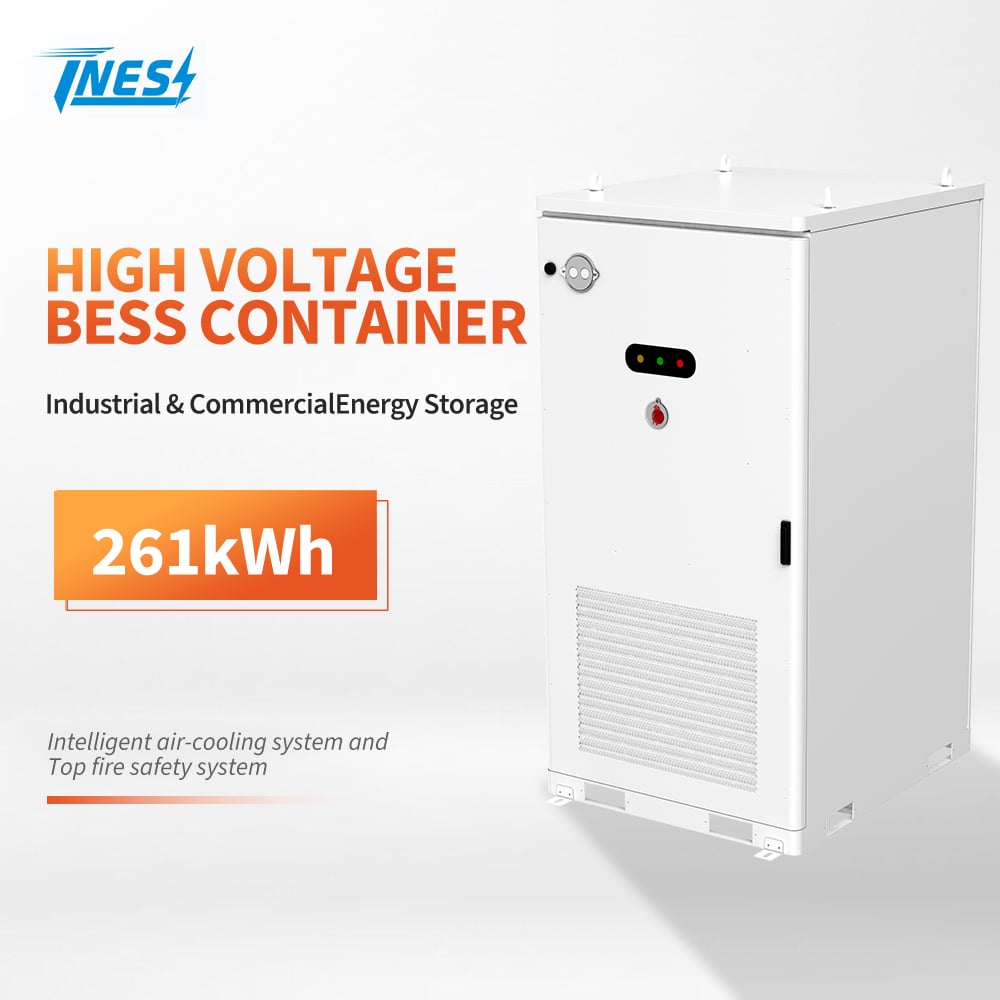
- JKESS offers a complete product range: a 261kWh liquid-cooled all-in-one system with a 125kW PCS for high-cycle or high-temperature applications, and 64–256kWh modular air-cooled stacked systems for moderate cycling where space is available.
The “Liquid vs Air” Debate Is Usually Framed Wrong
In C&I battery energy storage system (BESS) selection, the choice is often reduced to “liquid cooling is better but more expensive; air cooling is adequate but has a shorter life.” That framing overlooks a critical fact: the value of a cooling architecture depends on how hard the system operates and the environment in which it is installed.
For a 100kWh system performing just one shallow charge-discharge cycle per day in a temperature-controlled room at 25°C, the liquid-cooling premium may take more than 10 years to recover. The warranty could expire before the TCO breakeven point is reached.
For a factory project in Southeast Asia that cycles deeply twice a day, regularly operates above 40°C, and has very limited electrical-room space, air cooling’s derating, auxiliary fan consumption, and accelerated degradation can consume the initial equipment savings within 3–5 years. The right question is therefore: where does this project sit on the three decision variables?
The 3 Variables That Determine the Breakeven Point
These three variables jointly determine whether the liquid-cooling premium can be recovered over the system’s life. No single variable is enough to make the decision.
| Variable | Range favoring air cooling | Range favoring liquid cooling | How it affects TCO |
|---|---|---|---|
| Daily cycle intensity | ≤1 cycle/day, with shallow charging and discharging | 1.5 cycles/day, with deep cycling | Frequent cycling increases cell heat generation. Under continuous operation, air cooling can struggle to maintain temperature uniformity, accelerating degradation. |
| Extreme ambient temperature | Consistently ≤35°C throughout the year | Extreme temperatures 40°C | Air cooling can derate significantly in hot conditions; available power may fall to 85% at 45°C. Liquid cooling can have lower auxiliary consumption under these conditions. |
| Footprint / space constraints | Ample space outdoors or in a dedicated equipment room | Severely constrained indoor, electrical-room, or container space | Liquid cooling transfers heat efficiently, allowing a smaller footprint for the same cooling duty without extensive ventilation space. |
Scroll horizontally to read all four columns.
Liquid-Cooled vs Air-Cooled: A Side-by-Side TCO Breakdown
| Air-Cooled | Liquid-Cooled |
|---|---|
| Advantage: Lower initial equipment cost, by 15%–25% | Tradeoff: Higher initial equipment cost |
| Advantage: Simple architecture and straightforward maintenance | Advantage: Efficient heat transfer; cell temperature difference typically ≤3°C |
| Advantage: No coolant leakage risk | Advantage: Less derating at high ambient temperatures |
| Tradeoff: Larger cell temperature differences, potentially 5–10°C | Advantage: Lower auxiliary consumption in hot, high-cycle applications |
| Tradeoff: Significant derating at high ambient temperatures | Advantage: Smaller footprint for space-constrained sites |
| Tradeoff: Continuous fan operation can increase auxiliary consumption | Advantage: Slower cell degradation and longer system life |
| Tradeoff: Cell consistency declines faster under frequent cycling | Advantage: Better suited to high cycle intensity (1.5 cycles/day) |
| Best-fit scenarioModerate cycling, a temperature-controlled environment, and ample space | Best-fit scenarioHigh cycling, high temperatures, and limited installation space |
| Typical configurationJKESS modular stacked system (64–256kWh) | Typical configurationJKESS261 liquid-cooled all-in-one system (261kWh) |
How to Build a Defensible TCO Model
Use the following formula to quantify the TCO difference between liquid-cooled and air-cooled systems. The equipment quote is only the starting point: include auxiliary consumption, derating losses, and differences in service life.
TCO = Initial CAPEX + (Annual Auxiliary Power × Electricity Price × Years) + (Derating Loss × Revenue per kW × Years) + Replacement Cost (if lifetime differs)For consistent units, “Annual Auxiliary Power” in this simplified formula means annual auxiliary energy use in kWh/year. Use electricity prices in currency/kWh, derated capacity in kW, and annual revenue per kW in currency/kW/year; use the same evaluation period and currency for both systems.
- Initial CAPEX
- Liquid-cooled equipment typically costs 15%–25% more. Offset that premium against any additional ventilation, ductwork, or civil works required by the air-cooled design.
- Annual Auxiliary Power
- Air-cooling fans may run continuously at high temperature and load, while liquid-cooling pump consumption is relatively stable. At an ambient temperature of 45°C, air-cooling auxiliary consumption may be 30%–50% higher. Include the complete cooling system’s energy use, including pumps and chillers where applicable.
- Derating Loss
- At 45°C, an air-cooled system’s available power may drop to 85% of its rating, reducing peak-shaving revenue. Liquid-cooled systems typically derate less under the same conditions.
- Replacement Cost
- If larger cell temperature differences accelerate degradation in an air-cooled system, earlier capacity augmentation or battery replacement may be needed. Include that hidden cost when the expected service lives differ.
Which JKESS System Fits Your Scenario?
JKESS offers two product lines designed around the best-fit scenarios for liquid cooling and air cooling. Use the three decision variables above to match your project to a system.
| Project characteristics | Recommended JKESS system | Core specifications | Key advantages |
|---|---|---|---|
| High cycling + high temperature + limited space | JKESS261 liquid-cooled all-in-one system | 261.25kWh; 125kW PCS; 728–936V DC; liquid cooling; IP55 | Small cell temperature differences; perfluorohexanone + water fire suppression; integrated EMS/MPPT |
| Moderate cycling + temperature-controlled environment + ample space | Modular air-cooled stacked system (HV-BC250 + 16 × HV-B6U) |
64–256kWh product range; 80–1000V DC; intelligent air cooling | Lower initial cost, modular expansion, and straightforward maintenance |
| Moderate cycling + temperature-controlled environment + ample space | Modular air-cooled stacked system (HV-BC150-100A + 4–8 × HV-B6U) |
64–128kWh; 80–1000V DC; intelligent air cooling | Suited to residential and small C&I applications, starting at 64kWh |
| Low cycling + backup power as the priority | Modular air-cooled stacked system, minimum configuration | 64kWh (4 boxes); 100A master box | Lowest initial investment, with provision for later expansion |
| High cycling + weak grid + high temperature | JKESS261 liquid-cooled all-in-one system | 261.25kWh; 125kW PCS; supports on-grid/off-grid switching | Millisecond-level dispatch for weak-grid applications |
Scroll horizontally to read all four columns.
A Practical Decision Tree for Your Project
-
Calculate average daily cycling over the past 12 months.
- ≤1 cycle/day → Lean toward air cooling.
- 1.5 cycles/day → Lean toward liquid cooling.
-
Check local extreme-temperature data.
- Extreme temperature ≤35°C → Lean toward air cooling.
- Extreme temperature 40°C → Lean toward liquid cooling.
-
Assess installation space constraints.
- Ample outdoor or dedicated equipment-room space → Lean toward air cooling.
- Severely constrained indoor or electrical-room space → Lean toward liquid cooling.
-
Calculate the TCO model.
- Translate the three variables into the cost inputs in the TCO formula above.
- If liquid cooling’s TCO becomes lower within 5–7 years, choose liquid cooling; otherwise, choose air cooling.
-
Match the result to a JKESS product.
- Liquid-cooling scenario → JKESS261 (261kWh, 125kW PCS).
- Air-cooling scenario → Modular stacked system (4–16 boxes, 64–256kWh).
4 Common Mistakes in Cooling System Selection
1. Assuming liquid cooling is always better
The liquid-cooling premium needs high cycling, high temperatures, or space constraints to support it. Under mild conditions and low cycle intensity, air cooling offers the better TCO.
2. Comparing equipment quotes alone
The equipment price is only one part of TCO. Auxiliary consumption, derating losses, and service-life differences drive the long-term cost comparison.
3. Ignoring temperature differences and cell life
In hot, high-cycle conditions, air-cooled systems may develop cell temperature differences of 5–10°C. This can cause uneven degradation and declining usable capacity year after year. Liquid cooling’s ≤3°C temperature difference helps protect capacity retention.
4. Underestimating the cost of limited space
Indoor and electrical-room installations may require additional ventilation space and ductwork for air cooling. These construction and retrofit costs are often excluded from the equipment quote but can materially affect the total project cost.
Frequently Asked Questions
Is liquid cooling always better than air cooling for C&I BESS?
No. Liquid cooling has a higher initial cost and its TCO advantage only materializes when cycle intensity is high (typically 1.5 cycles/day), ambient temperatures exceed 40°C, or installation space is severely constrained. For moderate cycling in temperature-controlled environments with adequate space, air cooling often delivers a lower total cost of ownership.
What is the typical initial cost premium for liquid-cooled BESS?
Liquid-cooled systems typically cost 15%–25% more than air-cooled systems at the equipment level. However, this premium must be evaluated against auxiliary power savings, reduced derating losses, and longer battery life — not just the purchase price.
How does ambient temperature affect air-cooled BESS performance?
Air-cooled systems derate as ambient temperature rises. At 45°C, an air-cooled system rated for 100kW at 25°C may only deliver 85kW, reducing peak shaving revenue. Liquid-cooled systems typically have a smaller derating curve because liquid heat transfer is more efficient.
What cell temperature difference is acceptable in a BESS?
Cell-to-cell temperature difference should ideally be kept below 3°C to minimize differential aging. Air-cooled systems may reach 5–10°C difference under high-load or high-ambient conditions, while liquid-cooled systems are typically designed to maintain ≤3°C.
How does cycle intensity affect the cooling decision?
Higher cycle intensity means more heat generation and more frequent temperature fluctuations. A system cycling more than 1.5 times per day benefits from liquid cooling's tighter temperature control, which slows degradation and maintains usable capacity over the warranty period.
Can I start with an air-cooled system and upgrade to liquid cooling later?
Retrofitting liquid cooling into an air-cooled system is generally impractical because the enclosure, cooling plates, and plumbing are designed differently. The more cost-effective approach is to select the appropriate cooling architecture at the project design stage based on the three decision variables.
What does JKESS offer for liquid-cooled and air-cooled C&I BESS?
JKESS offers the 261kWh liquid-cooled BESS system (125kW PCS, 728–936V DC, integrated EMS/MPPT) for high-cycle, high-temperature, or space-constrained projects. For moderate-cycle projects with adequate space, JKESS offers modular air-cooled stacked systems (64–256kWh) using HV-BC250 or HV-BC150-100A master boxes with 4–16 HV-B6U/4U slave battery boxes.
Does the cooling system affect BESS fire safety design?
Yes. Liquid-cooled systems often integrate pack-level fire suppression (such as perfluorohexanone + water immersion) with directed pressure relief. Air-cooled systems rely more on thermal management through ventilation and may require different fire suppression strategies. The fire safety design should be evaluated alongside the cooling architecture.
How do I calculate auxiliary power consumption for cooling?
For air-cooled systems, auxiliary power is primarily fan consumption, which increases with ambient temperature and load. For liquid-cooled systems, it‘s primarily pump and chiller consumption, which is more stable. Request the auxiliary power curve from the supplier and multiply by your local electricity price and operating hours.
What is the breakeven period for liquid cooling premium?
The breakeven period depends on the project’s specific conditions. In high-cycle, high-temperature scenarios, the liquid cooling premium can be recovered in 3–5 years through auxiliary power savings, reduced derating losses, and slower capacity degradation. In moderate conditions, the breakeven may exceed the system‘s warranty period, making air cooling the more rational choice.
Not Sure Which Cooling Architecture Fits Your Project?
Share your load profile, ambient temperature data, and site constraints with our engineering team. We’ll help you run the 3-variable breakeven analysis and match it to the right JKESS system.
Request a Custom Quote →