EN
EN

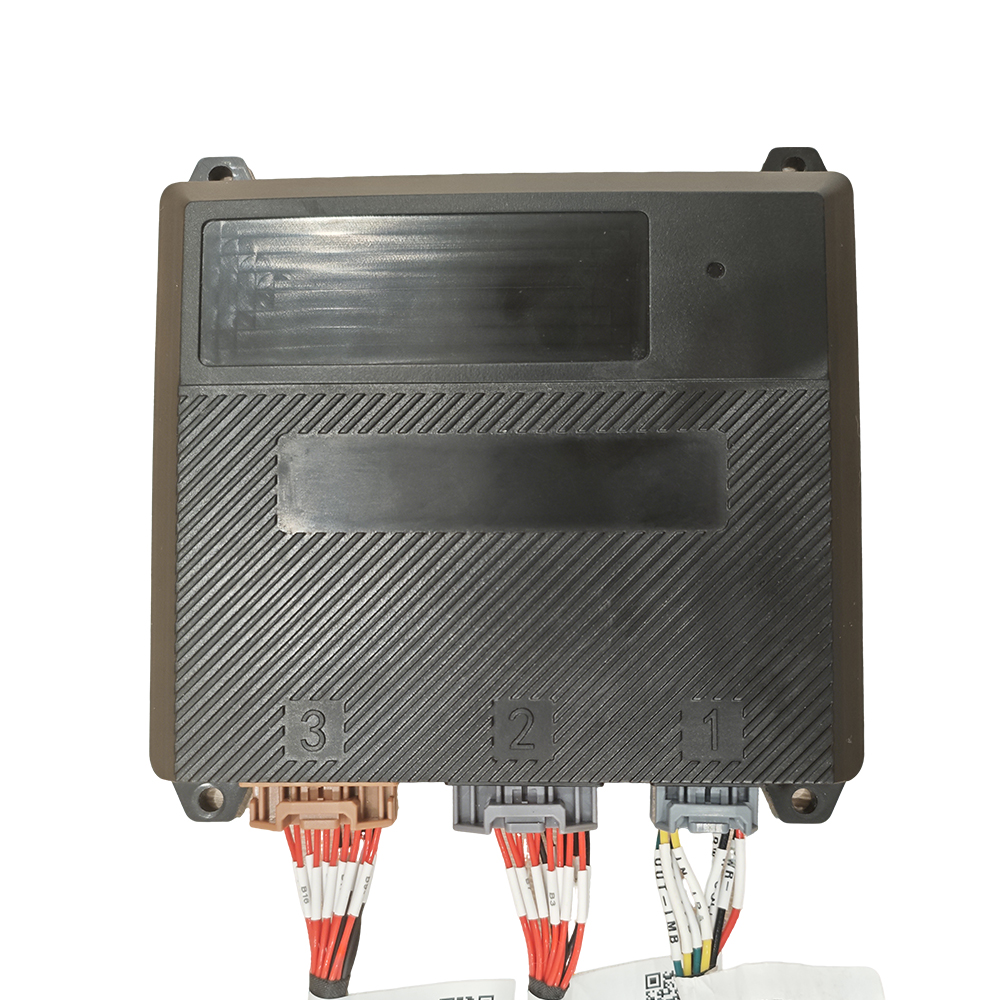
- Overview
- Related Products
- BMU-H5-16 slave BMS (1 unit)
- M1 / M2 / M3 wire-end connectors (matched set)
- Mounting screws & hardware kit
- Quick start guide (EN / DE / CN)
- Product warranty card
- Battery cells / modules
- Interconnecting wiring harnesses
- Enclosure / cabinet
- Relays or contactors
- Main controller (BCU)
- 📉 Inaccurate voltage readings leading to poor SOC estimation
- 🔥 Thermal runaway risk due to insufficient temperature monitoring
- 🔌 Communication instability in noisy industrial environments
- ⚖️ Imbalanced cells reducing pack capacity and lifespan
- 🧩 Integration complexity with multiple proprietary interfaces
- 🎯 High-precision voltage measurement (±1mV accuracy) for reliable SOC/SOH
- 🌡️ 16 dedicated temperature channels with fast response – early fault detection
- 📡 isoSPI with twisted-pair wiring – immune to EMI and voltage transients
- 🔋 2A active balancing reduces cell divergence, extending pack life by up to 30%
- 🧰 Standardized connector interfaces and clear documentation simplify integration
- 1. Verify that the battery pack voltage does not exceed 1000V.
- 2. Ensure all wiring harnesses are correctly terminated and insulated.
- 3. Confirm that the isoSPI twisted-pair cables meet twist pitch ≤20 mm and untwist ≤50 mm.
- 4. Check that the mounting surface is flat and free of conductive debris.
- 5. Disconnect system power before starting installation.
- 1. Mount the module securely using the 4 fixing holes.
- 2. Connect the battery voltage sense wires to the M2 / M3 connectors per the pinout.
- 3. Attach temperature sensors (NTC) to the designated channels.
- 4. Wire the isoSPI communication lines (IN_IPA / IN_IMA) using shielded twisted pair.
- 5. Connect auxiliary power (PWR_IN+) and system ground (PWR-).
- 6. Configure high-side outputs (H_OUT1 / H_OUT2) for fan or contactor control.
- 7. Power on and verify communication with the main controller.
- ✓ Target battery chemistry and nominal voltage
- ✓ Number of modules required (per rack / system)
- ✓ Desired delivery date and destination
- ✓ Preferred connector type (if custom)
- ✓ Firmware version requirements (if any)
- ✓ Custom connector pinout available on request (MOQ applies)
- ✓ Firmware can be pre-loaded to match your main controller protocol
- ✓ Standard packaging: anti-static bubble wrap + carton with partitions
- ✓ Shipping: DDP, FOB, or EXW – we support EU and SEA logistics
- ✓ Lead time: 2–3 weeks for standard orders; 4–6 weeks for custom
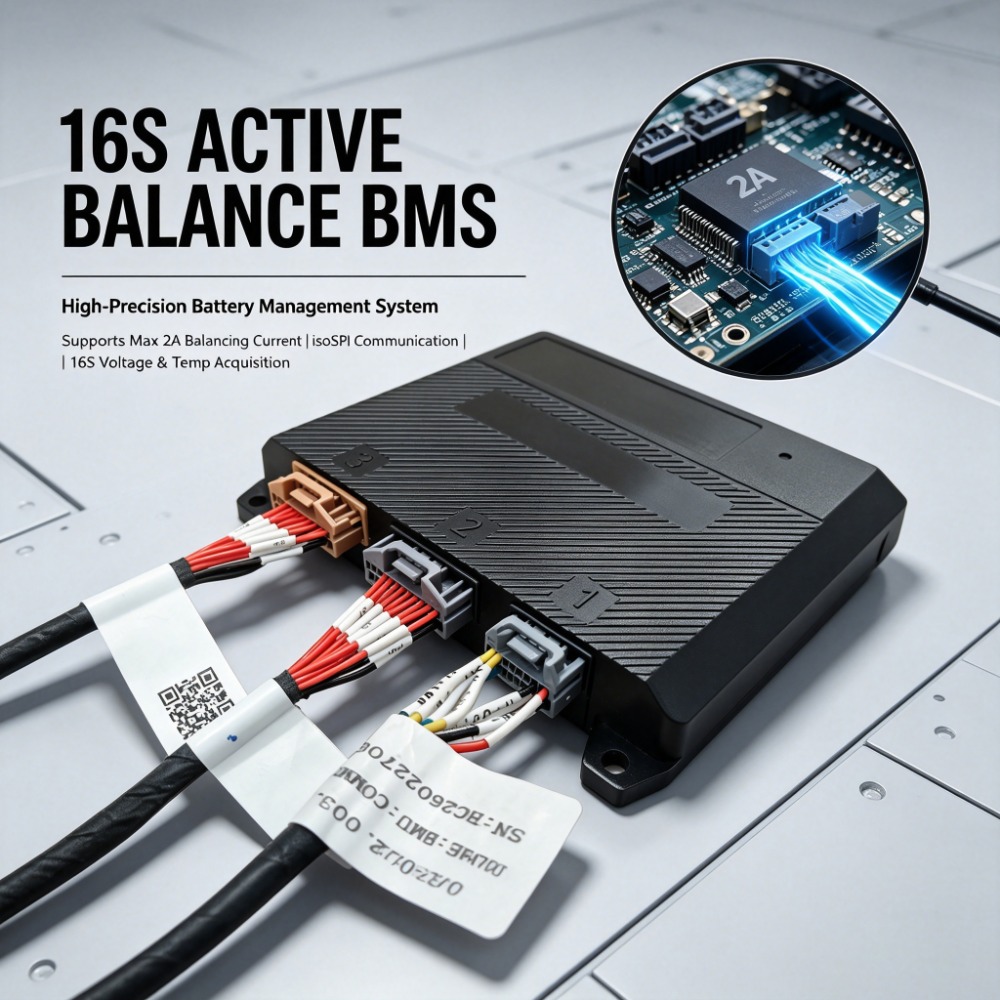
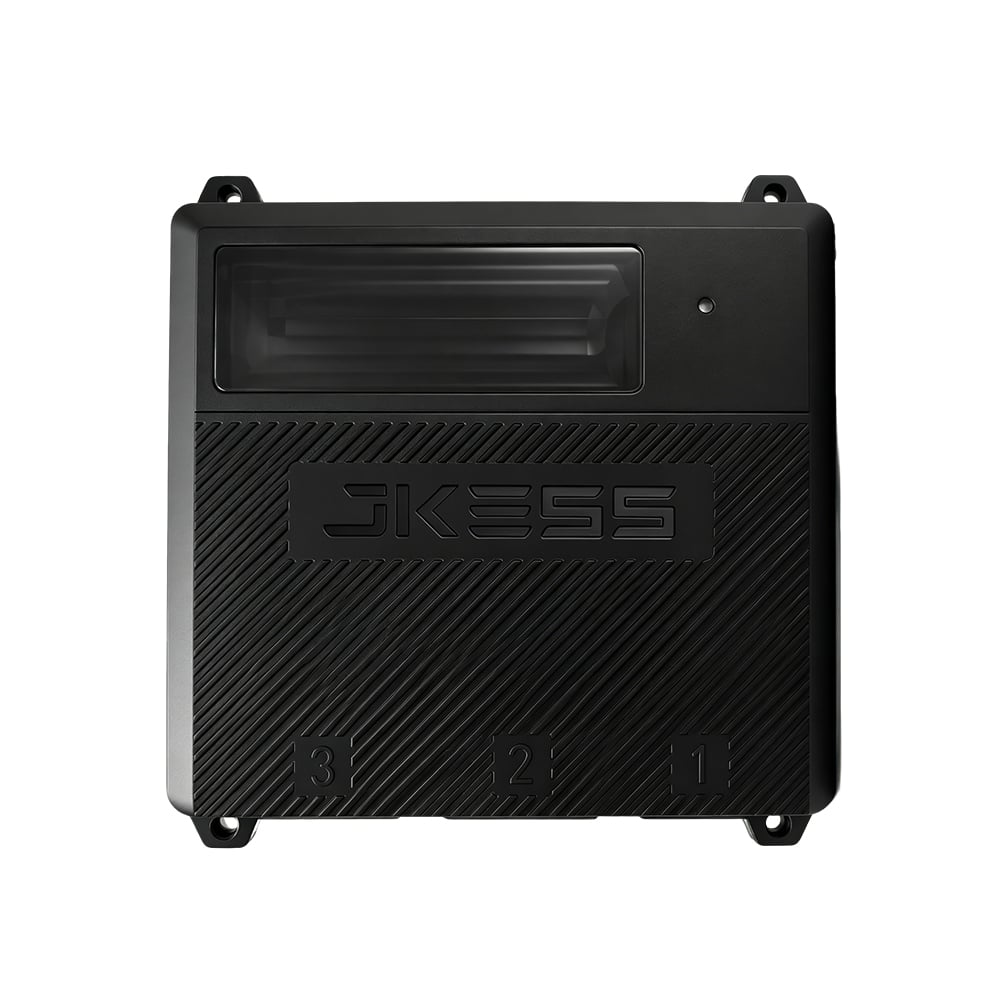
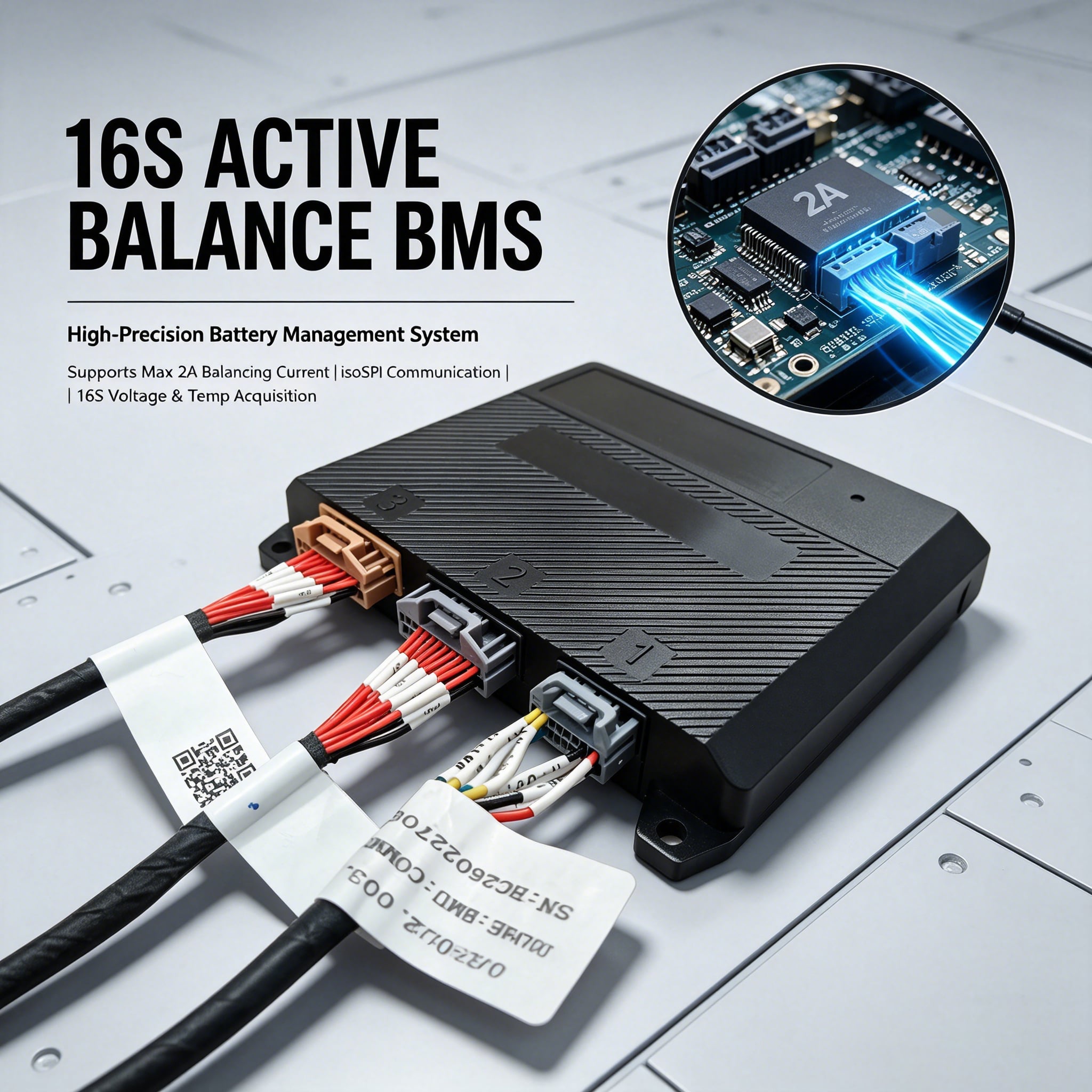
BMU-H5-16
16S Active Slave BMS – Precision. Reliability. Scalability.
High-voltage slave management unit for energy storage systems. Supports 16-cell voltage sensing, 16-channel temperature monitoring, and up to 2A active balancing. Engineered for ESS, battery packs, and industrial backup power.
📦 What's Included
What's Not Included
These components must be ordered separately.
Key Features
Engineered for demanding energy storage applications – precision, safety, and scalability built in.
16-Cell Voltage Sensing
High-accuracy monitoring for 16 series-connected cells, enabling precise SOC and SOH estimation.
16-Channel Temperature Sensing
Dedicated NTC inputs for comprehensive thermal management across the entire battery pack.
2A Active Balancing
High-efficiency active balancing up to 2A per channel minimizes energy loss and extends cycle life.
isoSPI Communication
Robust, isolated SPI interface for reliable daisy-chaining and noise-immune data transfer.
1000V Insulation Rating
Rated working voltage of 80-1000V with 3000Vac withstand voltage – safe for high-voltage systems.
Wide Temperature Range
Operates from –25°C to 85°C, storage from –40°C to 125°C – suitable for harsh environments.
2 High-Side Drivers
Integrated high-side switch outputs for fan control, contactor drive, or auxiliary loads.
Fan Feedback Monitoring
Dedicated fan signal return channels for real-time cooling system diagnostics.
Challenges & Solutions
How BMU-H5-16 directly addresses the real-world pain points of BMS integration.
⚠️ Common Pain Points
✅ How BMU-H5-16 Solves Them
Applications
Trusted by system integrators and battery manufacturers across multiple sectors.
Residential ESS
Home battery storage systems requiring reliable, compact slave BMS for 16S configurations.
Commercial & Industrial
Behind-the-meter storage, peak shaving, and backup power for commercial facilities.
Grid-Scale Storage
Utility-scale ESS with multiple slave units daisy-chained via isoSPI for large battery banks.
Telecom Backup
Base station and radar ground station backup power – robust and maintenance-friendly.
Second-Life Batteries
Repurposed EV battery packs – capacity improvement and safety monitoring for cascaded use.
Technical Specifications
Complete performance and electrical characteristics for engineering evaluation.
| Parameter | Value / Description |
|---|---|
| Product Name | BMU-H5-16 Active Balance Slave BMS Unit |
| Model / SKU | BMU-H5-16 |
| Supported Battery Types | LFP, NMC, LMO, LTO, LCO |
| Cell Voltage Sensing | 16 series channels, high accuracy |
| Temperature Sensing | 16 external NTC channels |
| Active Balancing Current | Up to 2A per channel |
| Communication Interface | 1 × isoSPI (daisy-chainable) |
| High-Side Outputs | 2 channels (fan / contactor drive) |
| Fan Feedback | 1 channel (speed / fault detection) |
| Operating Temperature | –25°C to +85°C |
| Storage Temperature | –40°C to +125°C |
| Relative Humidity | 5% – 95% RH (non-condensing) |
| Operating Altitude | Up to 3000 m |
| Insulation Resistance | ≥20 MΩ |
| Rated Working Voltage | 1500 V |
| Withstand Voltage | 3000 Vac / 50 Hz (1 min, no breakdown) |
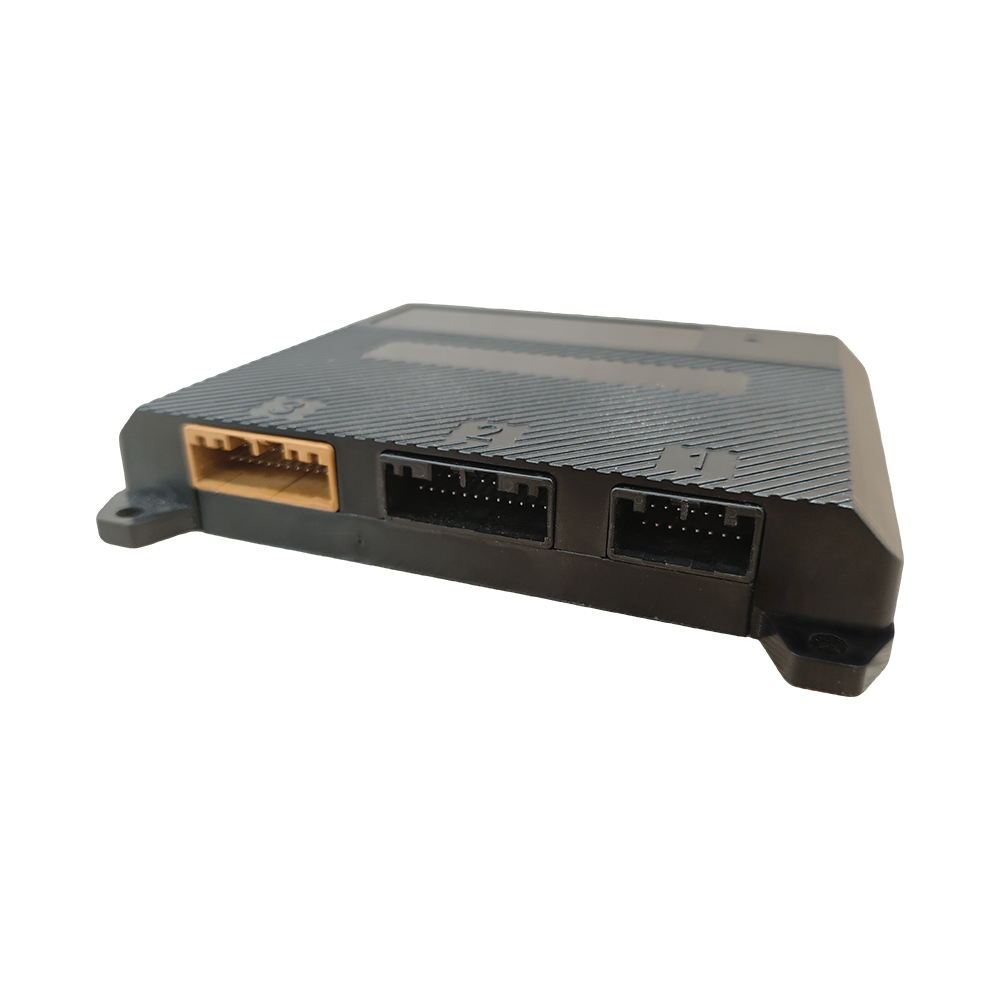
| Connector Interfaces | M1 (16-pin), M2 (32-pin black), M3 (32-pin blue) |
| Housing Material | High-strength plastic, 4 fixing holes |
Installation Notes
Proper installation ensures optimal performance and safety.
🔧 Before You Begin
⚙️ Key Installation Steps
Selection Guide
Choose the right configuration for your project.
Define Your Battery Type
LFP, NMC, LTO, or LCO – BMU-H5-16 supports all common chemistries.
Determine Cell Count
For 16S packs, BMU-H5-16 is the direct fit. For other counts, contact us for customized solutions.
Check Communication
isoSPI interface – ensure your main controller supports isoSPI or use an adapter.
Review Environmental Conditions
Verify operating temperature, humidity, and altitude against spec sheet.
Need help selecting? Tell us your project requirements and we'll recommend the optimal configuration.
Get Selection Support →Procurement & Ordering Guide
Everything you need to know before placing an order.
📋 Information to Prepare
🚚 Customization & Delivery
Recommended Compatible Products
Pair BMU-H5-16 with these components for a complete BMS solution.

BCU-B3 Main Controller
Master BMS controller with CAN, RS485, and cloud connectivity.
View Details →Explore our complete BMS product portfolio →
Frequently Asked Questions
Quick answers to the most common inquiries from our B2B customers.
Industry News & Trends
Stay informed about the latest developments in energy storage and BMS technology.
EU Battery Regulation 2026/XX – New Compliance Deadlines
Updated carbon footprint and due diligence requirements for battery manufacturers take effect Q4 2026. BMS systems must support advanced traceability features.
Read more →SEA Energy Storage Market Surge – 35% YoY Growth
Southeast Asia's utility-scale and C&I storage market is projected to reach 8.2 GWh in 2026, driven by renewable integration and grid modernization.
Read more →Second-Life Battery Utilization Gains Momentum
Repurposed EV batteries are increasingly used in stationary storage. Advanced BMS with active balancing and extensive temperature sensing is critical for safety and performance.
Read more →Grid-Scale BMS Reliability Standards Updated
New IEC standards for BMS in grid-scale applications emphasize redundancy, insulation coordination, and fault tolerance – aligning with BMU-H5-16's design philosophy.
Read more →Germany's Energy Storage Subsidy Program Extended
Commercial and industrial storage projects in Germany can now apply for up to 40% investment support, boosting demand for high-reliability BMS solutions.
Read more →