EN
EN

- Overview
- Related Products
- ✔ BCU-B3 Master Controller Unit
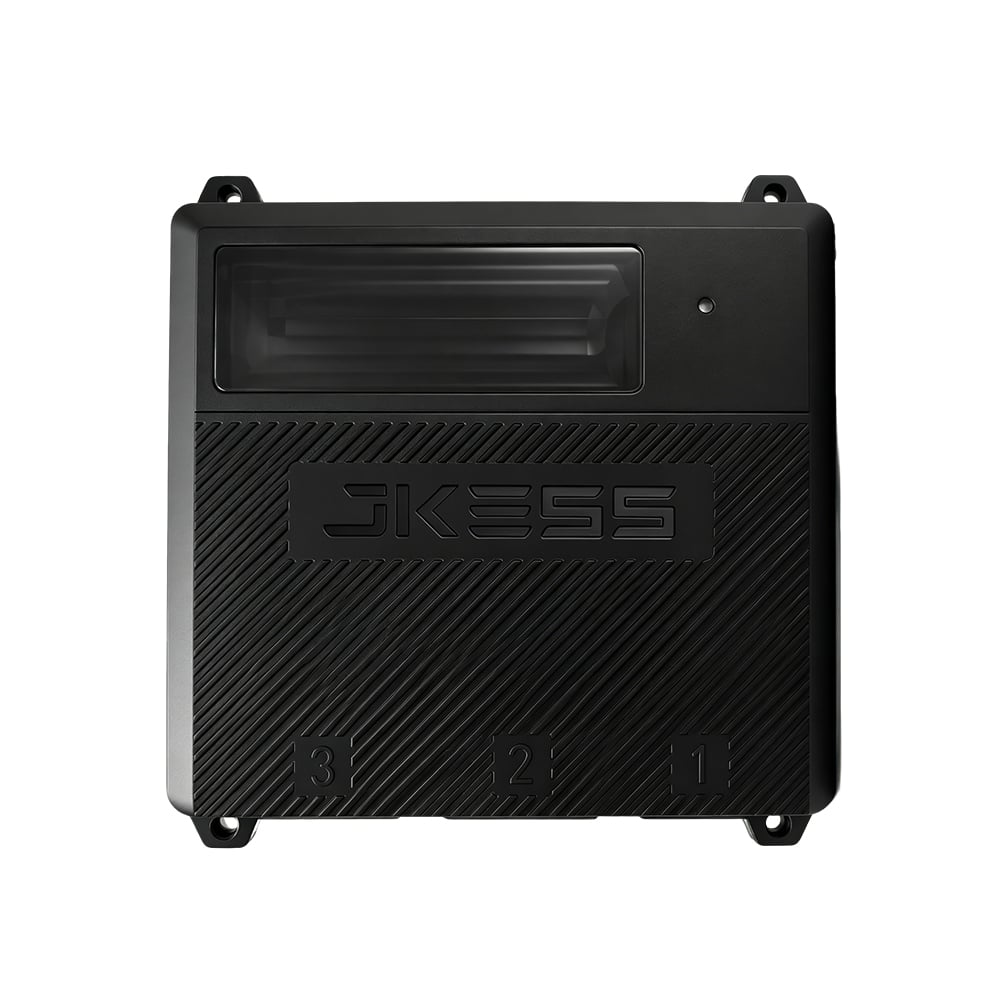
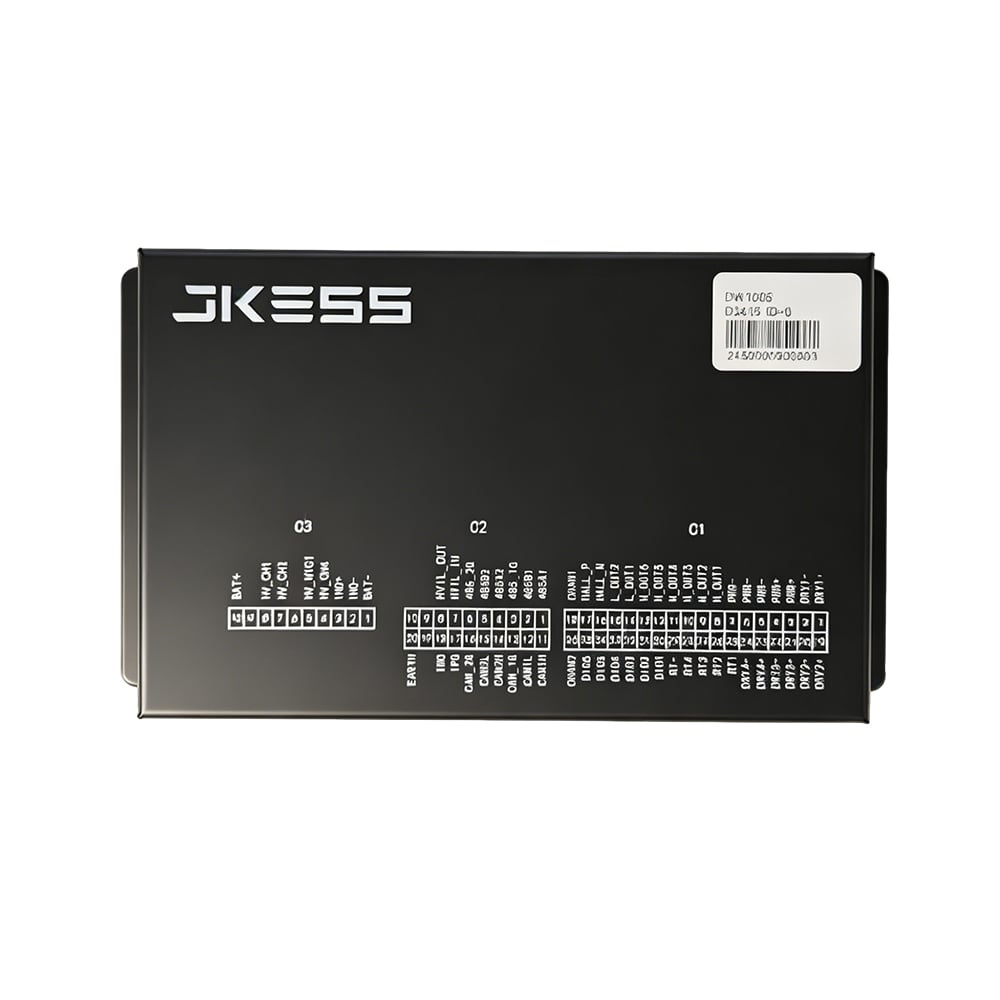
- ✔ C1 Connector (36‑pin, JAE MX34036NF1)
- ✔ C2 Connector (20‑pin, JAE MX34020NF1)
- ✔ C3 Connector (10‑pin, LOTES AAUS07AP5‑010K02)
- ✔ Mounting Screws & Quick Start Guide
- ✖ Battery cells or modules
- ✖ Wiring harnesses / cables
- ✖ Enclosure / cabinet
- ✖ Shunt resistor (sold separately)
- ✖ Communication cables (CAN/RS485)
- 🔻 Inaccurate SOC/SOH estimation leading to capacity loss and safety risks
- 🔻 Poor communication compatibility with third‑party PCS / EMS
- 🔻 High field failure rates due to inadequate protection and EMC design
- 🔻 Lack of customization support for unique system architectures
- 🔻 Limited scalability for multi‑cluster or containerized BESS
- ✔ Proprietary multi‑model algorithm with ±2% SOC accuracy across battery life
- ✔ 2× CAN + 2× RS485 with Modbus support, open protocol documentation
- ✔16kV ESD protection, and rigorous environmental testing
- ✔ Full firmware, hardware, and connector customization available
- ✔ Daisy‑chain topology supports up to hundreds of cells with flexible scaling
- Verify auxiliary supply voltage (9–32V DC)
- Ensure system power is disconnected
- Check connector compatibility (C1/C2/C3)
- Prepare shunt and wiring harnesses
- Mount unit on DIN rail or backplate (4× slots)
- Connect C1 (power + I/O), C2 (comm), C3 (sensing)
- Route communication cables separately from power
- Apply torque per connector datasheet
- Always power off before connecting/disconnecting
- Use shielded cables for CAN/RS485
- Ensure proper grounding (EARTH terminal)
- Do not exceed 32V on high‑side outputs
- Project name & system architecture diagram
- Battery cell chemistry and configuration
- Communication protocol requirements
- Environmental and certification needs
- Firmware parameter tuning (SOC/SOH algorithms)
- Custom CAN/RS485 protocol mapping
- Connector or pinout modifications
- Special labeling or packaging
- Standard lead time: 15–20 business days
- Shipping: DHL, FedEx, or sea freight (bulk)
- Packaging: anti‑static bubble wrap + carton
- Tracking and customs documentation provided
BCU-B3
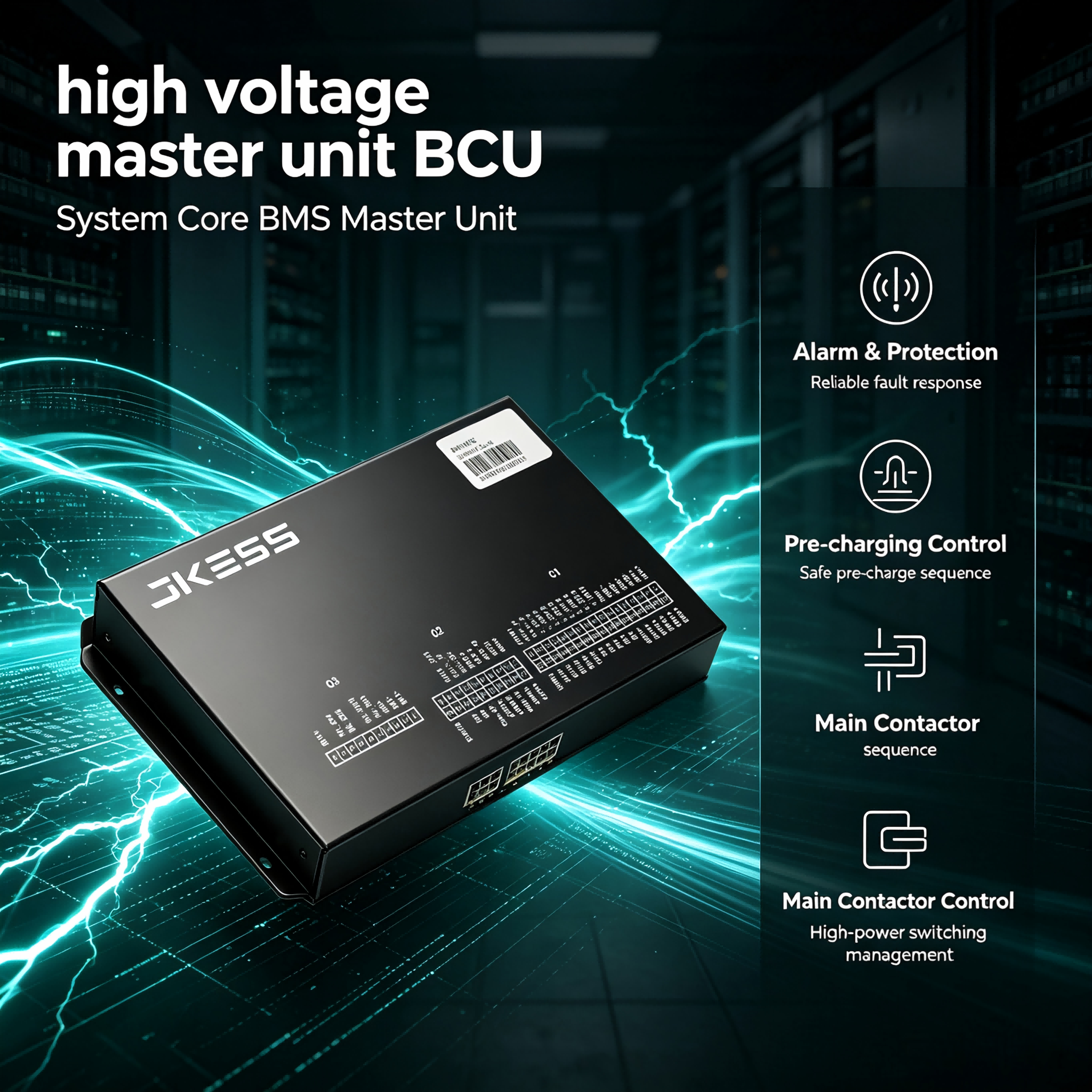
High Voltage Master Unit
Reliable · Precise · Customizable
Precision battery management for industrial & utility-scale energy storage systems.
Core Value Driven by Data
Engineered for system integrators and energy operators who demand precision, reliability, and long-term ROI.
System Efficiency
Maximize energy throughput with advanced SOC/SOH algorithms that reduce balancing losses.
Failure Rate Reduction
Functional safety design and rigorous testing lower field failure rates significantly.
Customization Ready
Firmware, protocols, and hardware configurations tailored to your project's unique requirements.
Global Certification
Fully certified for international markets with independent intellectual property rights and patents.
📦 Package Includes
⚠️ Package Does NOT Include
Engineered for Demanding Applications
The BCU‑B3 integrates all essential BMS master functions in a single rugged unit, purpose‑built for industrial energy storage.
Battery Status Estimation
Real‑time SOC, SOH, and SOP estimation using proprietary physics‑based models for LFP, NMC, LTO, and more.
System Strategy & Implementation
Intelligent charge/discharge management, thermal control, and balancing strategies that adapt to system conditions.
Communication Interface
2× isolated CAN, 2× isolated RS485, and daisy‑chain ports for seamless PCS, EMS, and BMU integration.
Switch I/O (GPIO · High‑side · Low‑side)
6× GPIO (100k pull‑up), 6× high‑side outputs (1A / 3A peak), and 2× low‑side outputs for flexible control.
Alarm & Protection
Over‑voltage, under‑voltage, over‑temperature, short‑circuit, and insulation fault alarms with fail‑safe response.
Pre‑charging & Contactor Control
Integrated pre‑charge and main positive contactor drivers with diagnostic feedback for safe system startup.
Total Voltage & Insulation Sampling
0–1500V total voltage measurement (±0.5% FS) and 20MΩ insulation resistance monitoring for safety.
High‑Accuracy Current Acquisition
±75mV shunt input with ±0.5% FS accuracy, enabling precise coulomb counting and state‑of‑charge tracking.
Addressing Your Critical Challenges
From integration complexity to long‑term reliability — the BCU‑B3 delivers a complete answer.
⚠️ Common Industry Pain Points
✅ How BCU‑B3 Solves Them
Where BCU‑B3 Excels
Deployed across the full spectrum of energy storage — from commercial systems to grid‑scale installations.
Commercial & Industrial Storage
Peak shaving, load shifting, and backup power for factories, data centers, and commercial buildings.
Utility‑Scale Grid Storage
Frequency regulation, renewable firming, and grid stabilization for 100MW+ battery energy storage systems.
Battery Pack Integration
Master control for modular battery packs in electric vehicle charging, telecom, and off‑grid applications.
Second‑Life / Repurposed Batteries
Extend the useful life of retired EV batteries with adaptive algorithms that handle degraded cell characteristics.
BCU‑B3 Specifications
All values measured at Ta = 25°C, humidity < 75%, nominal input voltage and rated output load unless otherwise noted.
| Parameter | Condition / Range | Value |
|---|---|---|
| Product Type | — | BMS Master Controller (BCU‑B3) |
| Auxiliary Supply Voltage | Operating | 9 V – 32 V DC |
| Auxiliary Supply Current | @24V, typical | 20 mA (typ) / 100 mA (max) |
| Total Voltage Sampling | Range · Accuracy | 0 – 1500 V · ±0.5% FS |
| Shunt Current Input | Range · Accuracy | ±75 mV · ±0.5% FS |
| Insulation Resistance | Monitoring | 20 MΩ (typical) |
| High‑Side Outputs | 6 channels · Continuous / Peak | 1 A / 3 A @ 300 ms |
| Low‑Side Outputs | 2 channels | 1 A (max) |
| Dry Contact Outputs | 4 channels | 0.5 A (1 A max), 32 V |
| Communication | CAN · RS485 | 2× isolated CAN · 2× isolated RS485 |
| Daisy‑Chain Interface | BMU communication | 1× differential pair (IP0 / IM0) |
| Temperature Sampling | Range · Accuracy | −30 °C to 105 °C · ±2 °C |
| Operating Temperature | Ambient | −25 °C to +85 °C |
| Storage Temperature | — | −40 °C to +105 °C |
| ESD Protection | Air discharge | 16 kV |
| Sleep Mode Current | Standby | ≤ 10 µA |
| Certifications | — | CE, RoHS, FCC |
Quick Installation Guide
Follow these steps to ensure safe and reliable deployment of the BCU‑B3 in your system.
Pre‑Installation Checklist
Key Mounting Steps
Safety & Precautions
Find the Right Configuration
Use the decision flow below to identify the optimal BCU‑B3 variant for your project, or contact our team for tailored advice.
📋 Decision Flow
Need help selecting the right variant?
Our technical sales team can analyze your system requirements and recommend the optimal BCU‑B3 configuration — including custom firmware, connectors, and protocol support.
Request Selection AssistanceOrdering Guide
Prepare the following information to streamline your order process.
📄 Pre‑Order Documentation
⚙️ Customization Options
🚚 Delivery & Logistics
Recommended JKESS Products
Pair the BCU‑B3 with these complementary products for a complete energy storage BMS solution.
HV BMS Master Box
Complete master control enclosure with integrated BCU, power supply, and contactor drivers.
View Details →HV Slave BMS (BMU)
High‑voltage slave unit for cell‑level voltage and temperature monitoring with daisy‑chain connectivity.
View Details →HV Battery Box Kits
Pre‑integrated battery boxes with slave BMS, contactors, and thermal management for modular systems.
View Details →Containerized BESS Solution
Turnkey container‑based energy storage systems with BCU‑B3 master, HVAC, and fire suppression.
View Details →Frequently Asked Questions
Everything you need to know about the BCU‑B3 — from specifications to ordering and support.
Energy Storage & BMS Market Trends
Stay informed on the latest developments in the global energy storage and BMS industry.
EU Battery Regulation 2026/1234 Enters Force
New requirements for battery carbon footprint, recycled content, and digital battery passports take effect, driving demand for advanced BMS with full traceability.
Read more →Southeast Asia Grid Storage Capacity to Triple by 2028
Vietnam, Thailand, and Indonesia announce new grid‑scale storage targets, creating major opportunities for BMS suppliers and system integrators in the region.
Read more →AI‑Driven BMS Gains Traction for Predictive Maintenance
Machine learning algorithms are being integrated into BMS master controllers to predict cell failures and optimize balancing strategies, reducing O&M costs by up to 30%.
Read more →