EN
EN
International Energy Agency
Batteries and Storage
The International Energy Agency's overview of global battery storage deployment, market trends, and policy developments.
Read More →

Home > Product > Accessories
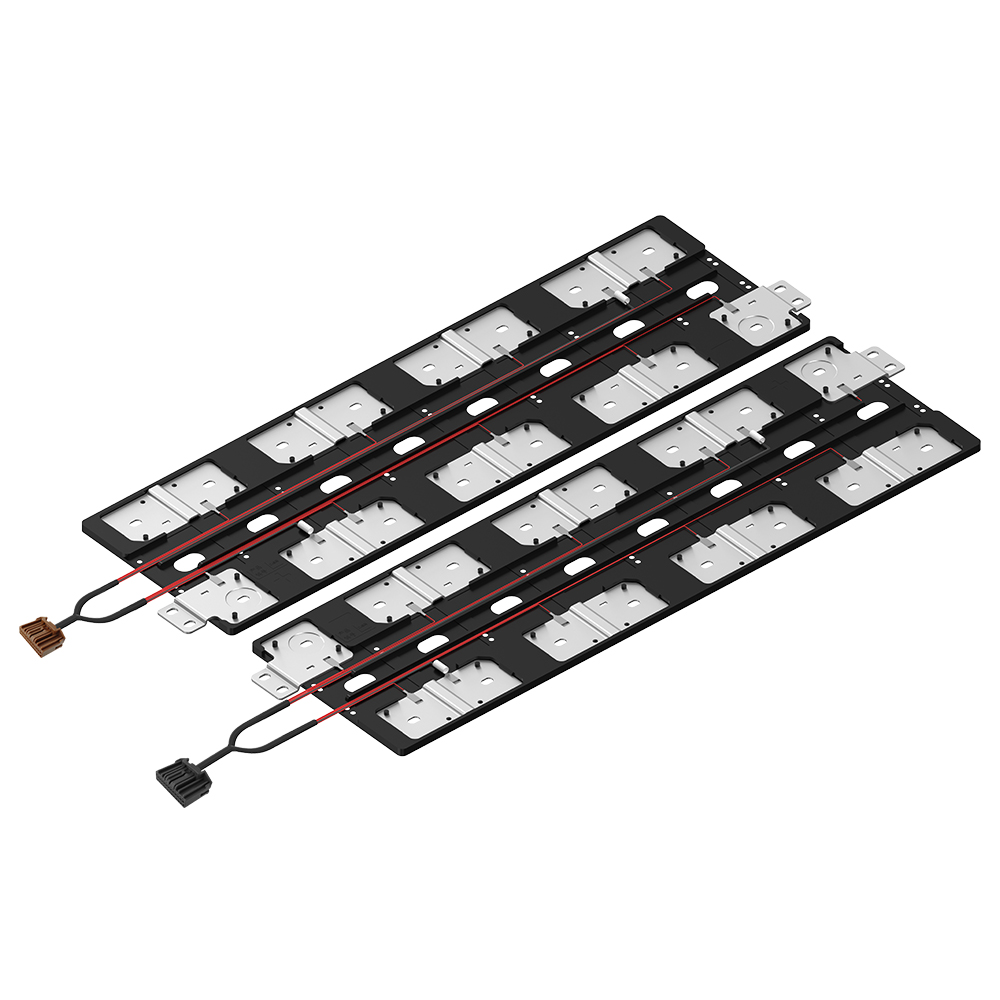
A precision-engineered CCS wiring harness integrating 16-channel cell voltage sensing and 4-point NTC temperature monitoring for 16S lithium-ion battery packs. Built for reliable BMS interconnect in energy storage systems from 5 kWh to 5 MWh.
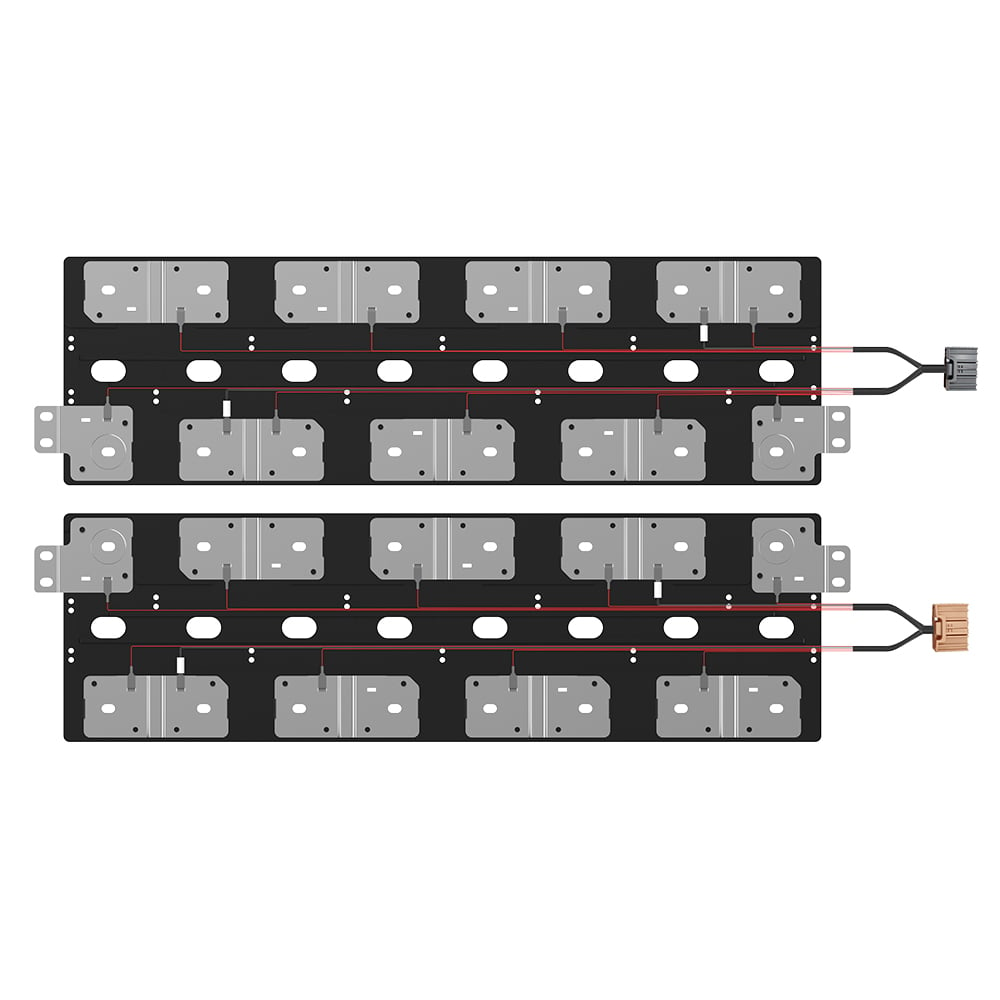
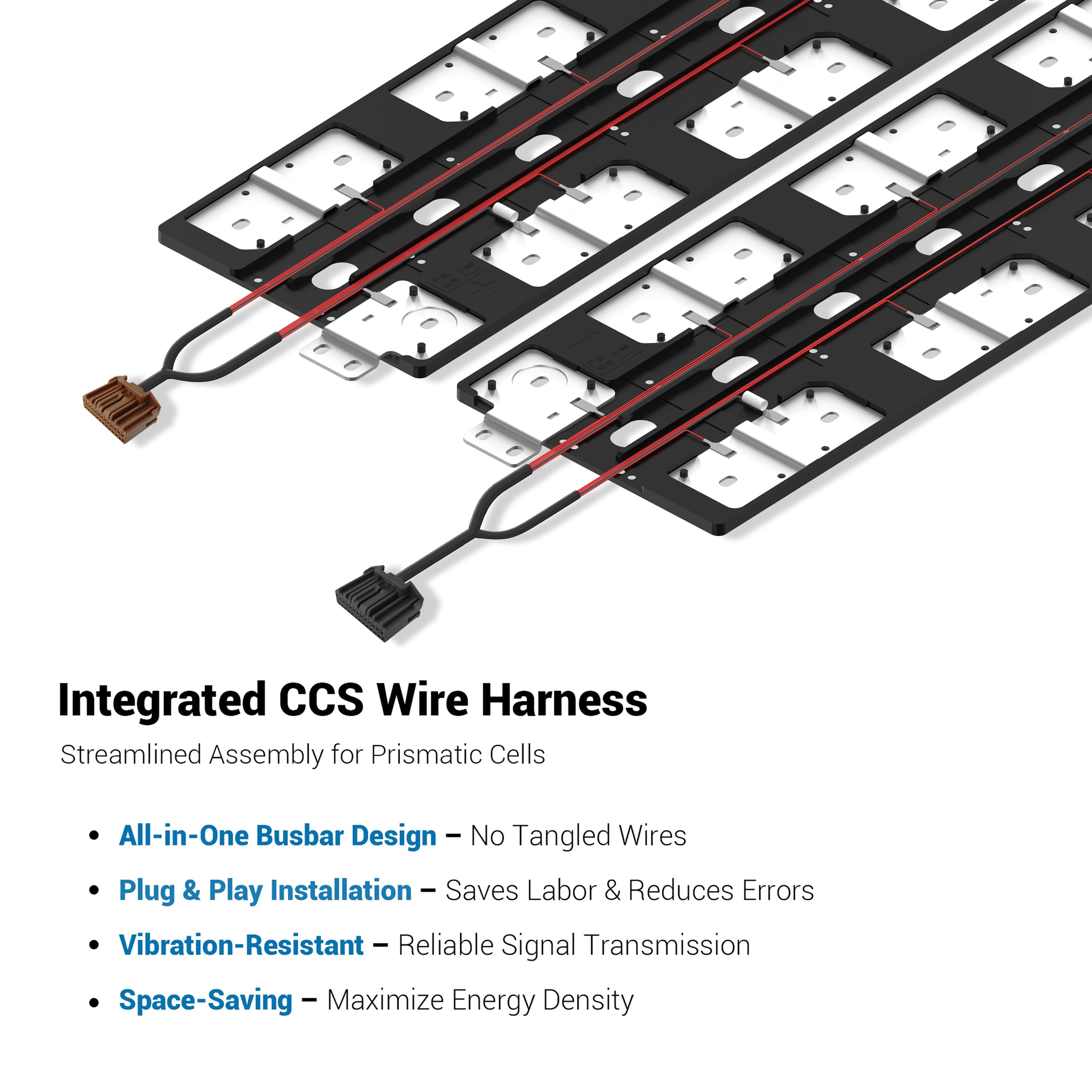
The JKESS 16S CCS wiring harness (Cell Contact System) is a precision-engineered interconnect assembly designed for 16-cell-series lithium-ion battery packs used in stationary energy storage applications. It serves as the critical data acquisition layer between the battery cells and the battery management system (BMS), delivering accurate cell voltage readings and temperature data that enable balanced charging, overvoltage protection, and early thermal fault detection.
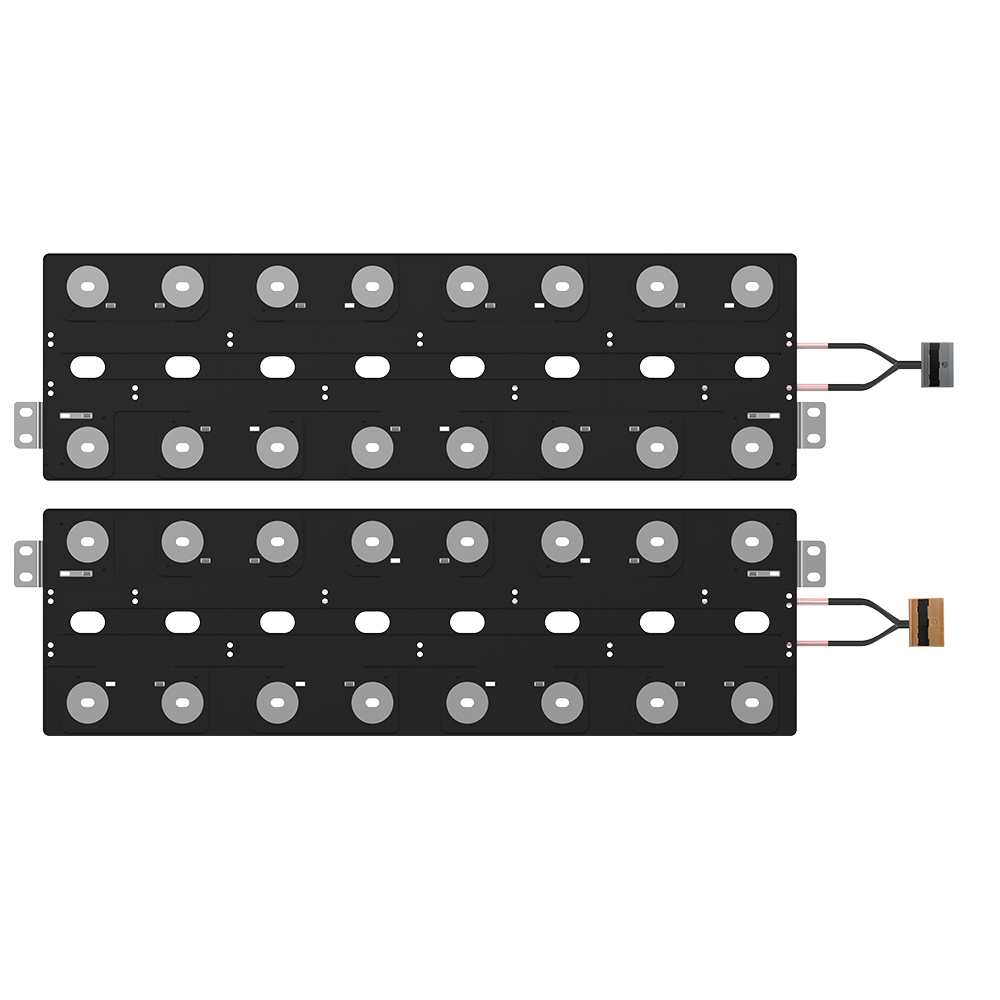
The product ships as a modular two-piece set — CCS-M2 (covering cells B0 through B8) and CCS-M3 (covering cells B9 through B16) — that together form a complete 16S monitoring harness. Each module integrates sixteen individual cell voltage sensing channels, two NTC thermistor temperature sensors, laser-welded aluminum busbars with selective nickel plating, and a molded plastic support bracket that simplifies installation and wire routing.
All voltage sensing wires use UL1332 AWG#22 conductors with high-temperature PTFE insulation, while NTC sensor leads use UL4413 AWG#24 wire rated for −40°C to +105°C continuous operation. Busbar-to-tab connections are made via laser-welded 0.3 mm nickel tabs, producing shear strengths of ≥300 N and welding internal resistance ≤60 μΩ — values verified through 100% production-line testing. The entire assembly is bundled with cloth tape and protected by double-wall heat-shrink tubing at all splice points.
Please note: This product is a wiring and monitoring component only. Battery cells, BMS units, and enclosure hardware are not included and must be sourced separately.
Complete electrical, mechanical, and compliance data for the JK-CCS-16S-M2M3 assembly.
| Parameter | Specification |
|---|---|
| Configuration | 16 cells in series (16S), modular 2×8S design (CCS-M2 + CCS-M3) |
| Cell Voltage Sensing | 16 channels (B0–B16), UL1332 AWG#22 wires |
| Temperature Monitoring | 4× NTC thermistors, 10KΩ @25°C, B-value 3435K, inter-sensor accuracy ±1°C |
| NTC Wire | UL4413 AWG#24 |
| Busbar Material | Aluminum alloy with selective nickel plating (5–15 μm) |
| Nickel Tab Thickness | 0.3 mm |
| Laser Welding Strength | Shear force ≥ 300 N; Peel force ≥ 60 N |
| Welding Internal Resistance | ≤ 60 μΩ (100% production-line tested) |
| Conduction Rate | 100% (including NTC circuit) |
| Loop Resistance | ≤ 1 Ω |
| Operating Temperature | −40°C to +105°C |
| Insulation (Busbar to Bracket) | ≥ 4380 VDC, 2s, leakage ≤ 1 mA |
| Insulation (PIN to PIN) | 1000 VDC, 2s, insulation resistance ≥ 500 MΩ |
| Withstand Voltage (PIN to PIN) | 1000 VDC, 2s, leakage ≤ 1 mA |
| Overall Module Length | ~601.7 mm (each module) |
| Mounting | Integrated metal mounting brackets with pre-punched holes |
| Wire Routing | Bundled with cloth tape; double-wall heat-shrink tubing at splice points; splice point 100 mm from connector, 30 mm spacing between splices |
| Connector Type | WTB41 series (24-pin housing), keyed differently for M2/M3 to prevent misconnection |
| Standards & Compliance | QC/T 417.1-2001; RoHS; REACH; GB/T 1804-m (general tolerances) |
| Product Labeling | 28-character QR code: PartNo-Date-Shift-Line-Serial (e.g., CC1005TN0-20240603-D-01-0001) |
| Packaging | Anti-static tray + corrugated carton; custom packaging available on request |
Six engineering and manufacturing advantages that set the JK-CCS-16S-M2M3 apart from commodity interconnects.
Sixteen independent sensing channels using AWG#22 PTFE-insulated wires deliver accurate voltage data for every cell in the string. This enables precise state-of-charge calculation, balanced charging across the pack, and early detection of cell-level anomalies before they escalate.
Four integrated NTC thermistors (10KΩ at 25°C, B-value 3435K) with ±1°C inter-sensor accuracy provide real-time thermal data across the module. This distributed sensing approach is essential for early thermal runaway detection and proactive battery management.
Nickel tabs are laser-welded to aluminum busbars with a shear force of ≥300 N and peel force ≥60 N. Welding internal resistance is kept below 60 μΩ, verified through 100% in-line testing. This ensures low-resistance current paths and long-term mechanical integrity under thermal cycling.
The CCS-M2 and CCS-M3 modules are keyed differently at their WTB41 connectors to physically prevent cross-connection during pack assembly. This modular approach reduces installation time, minimizes wiring errors, and allows for easier field service and replacement of individual modules.
Rated for continuous operation from −40°C to +105°C, with UL1332 and UL4413 high-temperature wire insulation throughout. This range accommodates outdoor ESS enclosures, unconditioned equipment rooms, and thermally demanding pack environments without performance degradation.
Every harness is RoHS and REACH compliant and manufactured to QC/T 417.1-2001 wiring standards. Each unit carries a unique 28-character QR code encoding part number, production date, shift, line, and serial number for complete manufacturing traceability throughout the product lifecycle.
Where the JK-CCS-16S-M2M3 delivers measurable performance across diverse energy storage deployments.
Home battery packs in the 5–20 kWh range commonly use 16S LFP modules. This CCS wiring harness feeds reliable cell voltage and temperature data to the residential BMS, supporting safe daily charge-discharge cycling, time-of-use optimization, and solar self-consumption strategies. Wall-mounted and floor-standing units both benefit from the compact, pre-routed assembly.
Cabinet-based systems spanning 50 kWh to 5 MWh integrate dozens of 16S modules for peak shaving, demand-charge management, and backup power. The keyed connectors on the M2 and M3 modules prevent wiring errors during multi-module assembly, while 100% conduction testing ensures every sensing channel performs from day one.
Contract manufacturers building 16S LFP battery modules for system integrators rely on the CCS wiring harness as the standard BMS interface component. The modular 2×8S design reduces assembly labor, the integrated mounting brackets speed up mechanical integration, and full QR-code traceability supports ISO-aligned quality management systems.
Data centers and industrial UPS battery racks demand continuous cell-level monitoring for maximum uptime. The 4-point NTC thermistor array provides early thermal warning across the module, while the wide −40°C to +105°C operating range and UL-rated wire insulation ensure reliable signal integrity in climate-controlled and unconditioned environments.
Distributed energy nodes in remote or islanded systems require battery monitoring that demands no regular maintenance. The laser-welded busbar connections, bundled cloth-tape routing, and heat-shrink-protected splices provide long service life with minimal field intervention, helping operators maximize battery pack longevity in challenging locations.
Five common failure modes and integration challenges — and how JKESS engineering addresses each one.
Low-cost harnesses with high-resistance crimp connections introduce voltage drops that cause BMS misreadings. This leads to overcharge or overdischarge events, accelerated cell degradation, and premature pack failure. The problem is especially acute in high-current applications where even small resistances create significant measurement errors.
Laser-welded nickel tabs on selectively nickel-plated aluminum busbars maintain welding internal resistance below 60 μΩ — a threshold verified on every single production unit. Loop resistance stays under 1 Ω, and conduction rate is 100%, including all NTC circuits. Accurate cell data means accurate BMS decisions and longer battery service life.
Single-point temperature sensors or sensors with poor inter-sensor calibration can miss localized hotspots developing between cells. By the time a single sensor registers an anomaly, thermal runaway may already be underway. This creates a critical safety gap in high-density battery pack designs.
Four NTC thermistors distributed across the 16S module provide multi-point thermal coverage with inter-sensor accuracy of ±1°C. This distributed sensing architecture detects thermal gradients early, giving the BMS time to initiate protective measures — load shedding, cooling activation, or isolation — before a thermal event escalates.
Traditional component sourcing requires 4–8 weeks of ocean freight, plus customs clearance, delaying production schedules and forcing system integrators to carry excess inventory. For OEMs responding to time-sensitive project bids, this can mean lost contracts or expensive air-freight surcharges.
Local inventory in Europe and the United States enables typical delivery in 3–7 business days for stock configurations. This eliminates ocean-freight lead times, reduces import duties and customs delays for EU and US customers, and allows OEMs to operate with leaner inventory positions.
Multi-module battery pack harnesses often use identical-looking connectors across different cell groups. During pack assembly, technicians can inadvertently cross-connect modules, leading to short circuits, sensor channel misalignment, and — in worst-case scenarios — destructive pack failures at first power-on.
The CCS-M2 and CCS-M3 modules use WTB41-series 24-pin housings with different keying orientations. This physical incompatibility makes it impossible to plug the wrong module into the wrong position, eliminating a common source of assembly error and reducing rework costs on the production line.
Untested welds, skipped insulation checks, and inconsistent wire routing are common problems with price-driven component sourcing. Field returns, warranty claims, and safety incidents erode margins and damage brand reputation. The true cost of a failed battery pack far exceeds the initial component savings.
Every JKESS CCS wiring harness passes a full in-line test sequence: welding internal resistance, electrical conduction (including NTC circuits), insulation resistance, and withstand voltage. Results are recorded and traceable via each unit's unique QR code. No batch sampling — 100% of units are verified before shipment.
Integrated Cell Contact System (CCS) wiring harnesses have replaced discrete wire bonding and manual point-to-point wiring as the dominant design approach in modern lithium-ion battery packs for energy storage. The reasons are structural: CCS integration consolidates cell voltage sensing, temperature monitoring, and busbar current collection into a single, pre-tested assembly. This reduces manufacturing labor, minimizes wiring errors, and enables automated production lines that deliver consistent electrical performance across high-volume builds.
Major BMS manufacturers and energy storage system integrators across residential, commercial, and utility-scale segments now specify CCS wiring harnesses as standard components in their 16S module designs. The modular 2×8S architecture — as used in the JKESS JK-CCS-16S-M2M3 — has become particularly common because it balances production flexibility with installation simplicity. For OEMs and pack manufacturers, specifying a proven CCS interconnect is no longer an option; it is a baseline requirement for competitive product quality and field reliability.
“Over 90% of new LFP energy storage battery modules use integrated CCS wiring harnesses for cell monitoring.”— Industry estimate, energy storage sector
Four structural advantages that make JKESS the preferred CCS wiring harness supplier for energy storage OEMs and system integrators.
Local inventory in Europe and the United States for fast delivery, reduced customs friction, and lower total landed cost. Typical delivery in 3–7 business days for stock items. Bulk sea-freight and air-freight options available for large-volume orders shipped from our production facility.
Full in-house engineering team for custom CCS designs. Non-standard cell counts, alternative connector types, custom wire lengths, modified busbar geometries, and integration with proprietary BMS pinouts. We support design-for-manufacturing reviews and rapid prototyping for new product development.
Every harness passes welding resistance, conduction, insulation, and withstand voltage tests before shipment. ISO-aligned production processes with full QR-code traceability link each unit to its exact test records, material lots, and production shift for complete quality accountability.
Direct-from-factory pricing with low minimum order quantities suitable for startups, pilot projects, and high-volume OEM programs alike. Volume discounts available for established distributor and system integrator partnerships. No middleman markup — you work directly with the manufacturer.
Common questions about the 16S CCS wiring harness, compatibility, ordering, and customization.
A CCS (Cell Contact System) wiring harness is an integrated interconnect assembly that combines cell voltage sensing wires, temperature sensor leads, and current-carrying busbars into a single pre-wired module. It serves as the data and power interface between the battery cells and the BMS, enabling accurate voltage monitoring, temperature measurement, and balanced charging across the pack.
No. This product is a wiring and monitoring component only. It includes the CCS-M2 and CCS-M3 modules with integrated voltage sensing wires, NTC thermistors, aluminum busbars, nickel tabs, mounting brackets, and WTB41 connectors. Battery cells, BMS units, and enclosure hardware must be sourced separately.
The JK-CCS-16S-M2M3 is designed for lithium iron phosphate (LFP/LiFePO4) cells in 16S configurations, which is the most common chemistry for stationary energy storage. The voltage sensing range and NTC temperature ratings also support compatible lithium-ion chemistries operating within the −40°C to +105°C temperature window. Contact our engineering team for verification with specific cell models.
The complete 16S set includes four NTC thermistors: T1 and T2 on the CCS-M2 module (cells B0–B8), and T3 and T4 on the CCS-M3 module (cells B9–B16). Each sensor is 10KΩ at 25°C with a B-value of 3435K and inter-sensor accuracy of ±1°C. Exact placement coordinates can be provided upon request for pack thermal modeling.
The WTB41-series 24-pin connectors on the M2 and M3 modules use standard pin assignments that are compatible with most commercial BMS units designed for 16S LFP battery packs. We provide complete pinout documentation for integration. For proprietary BMS designs, our OEM team can customize the connector type and wiring layout to match your exact pin configuration.
Our standard MOQ is intentionally flexible to support both early-stage prototyping and high-volume production. Small evaluation quantities are available for design verification and pilot builds. Volume pricing applies to OEM and distributor orders. Contact [email protected] with your projected annual usage for a tailored quotation.
Stock configurations ship from our EU or US overseas warehouses with typical delivery in 3–7 business days, depending on destination. Custom OEM orders manufactured at our production facility typically require 2–4 weeks for production, plus express or freight shipping. Bulk sea-freight options are available for large volume orders with negotiated schedules.
Yes. Our in-house engineering team supports full OEM/ODM customization including non-standard cell counts (e.g., 8S, 12S, 24S), alternative connector interfaces, custom wire lengths, modified busbar geometries for different cell form factors, and integration with proprietary BMS communication protocols. A design review and prototyping phase is standard for custom programs.
Each harness undergoes 100% in-line testing across four parameters: welding internal resistance (≤60 μΩ), electrical conduction (including all NTC circuits), insulation resistance between pins, and withstand voltage. Every unit also receives a visual inspection and is traceable via a unique 28-character QR code that links to production date, line, shift, and serial number records.
The JK-CCS-16S-M2M3 is RoHS and REACH compliant, and manufactured to QC/T 417.1-2001 automotive wiring standards with GB/T 1804-m general tolerances. Please note that we do not currently claim ISO, UL, CE, or IEC certifications for this product. Contact us for the latest compliance documentation or third-party testing requirements.
Authoritative sources for energy storage market data, technology analysis, and policy developments.
The International Energy Agency's overview of global battery storage deployment, market trends, and policy developments.
Read More →Daily news and analysis covering the global energy storage industry, including battery technology, project deployments, and market forecasts.
Read More →BloombergNEF's research hub for energy storage market outlooks, price forecasts, and technology trend analysis.
Read More →In-depth coverage of energy storage technology, policy, and project news from around the world.
Read More →Tell us about your battery pack design and production requirements. We'll respond within one business day with pricing, availability, and technical documentation.
Contact Us Today