EN
2A Active Balancing
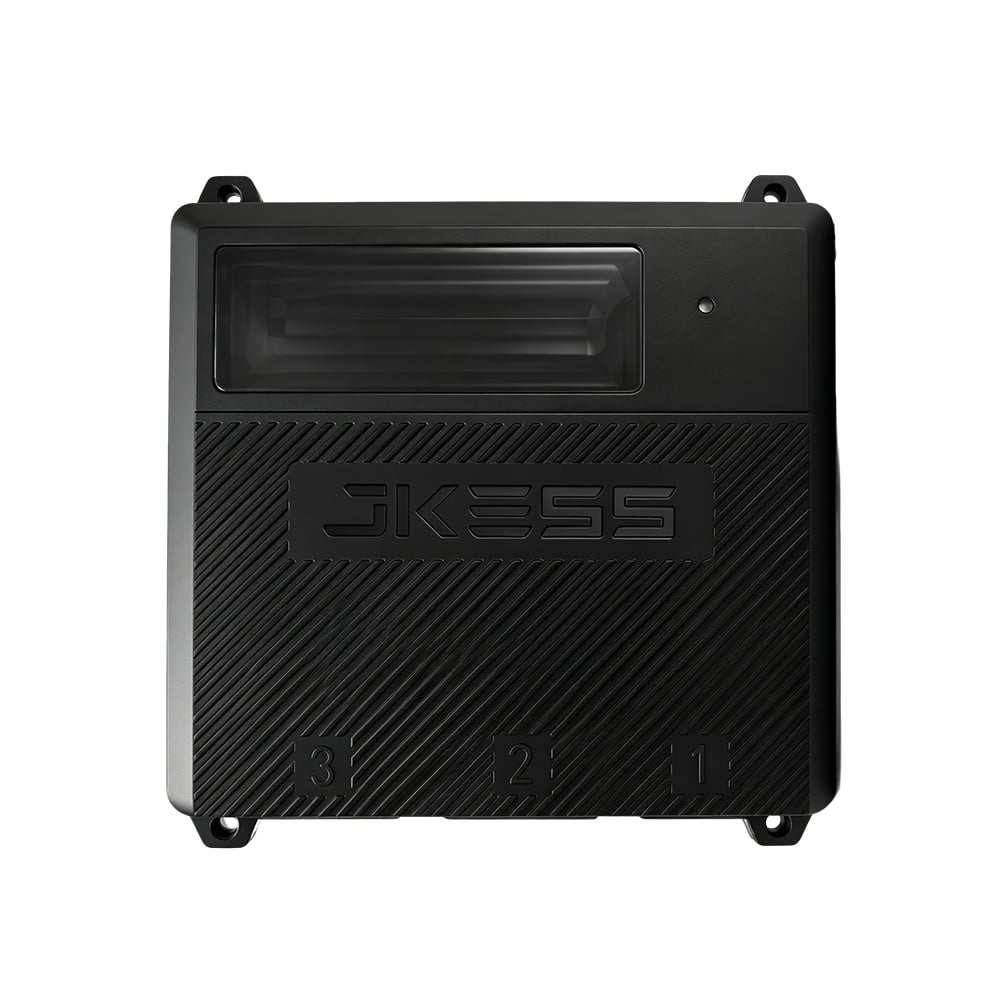
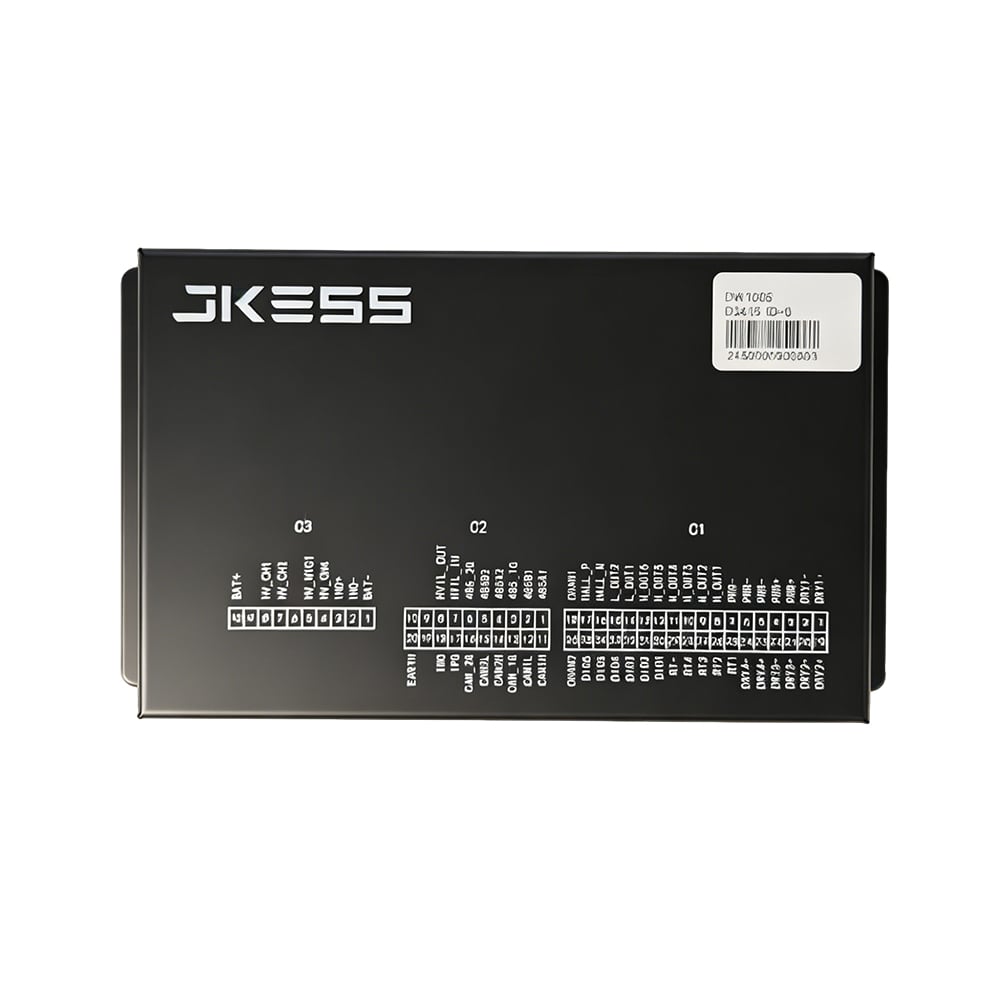
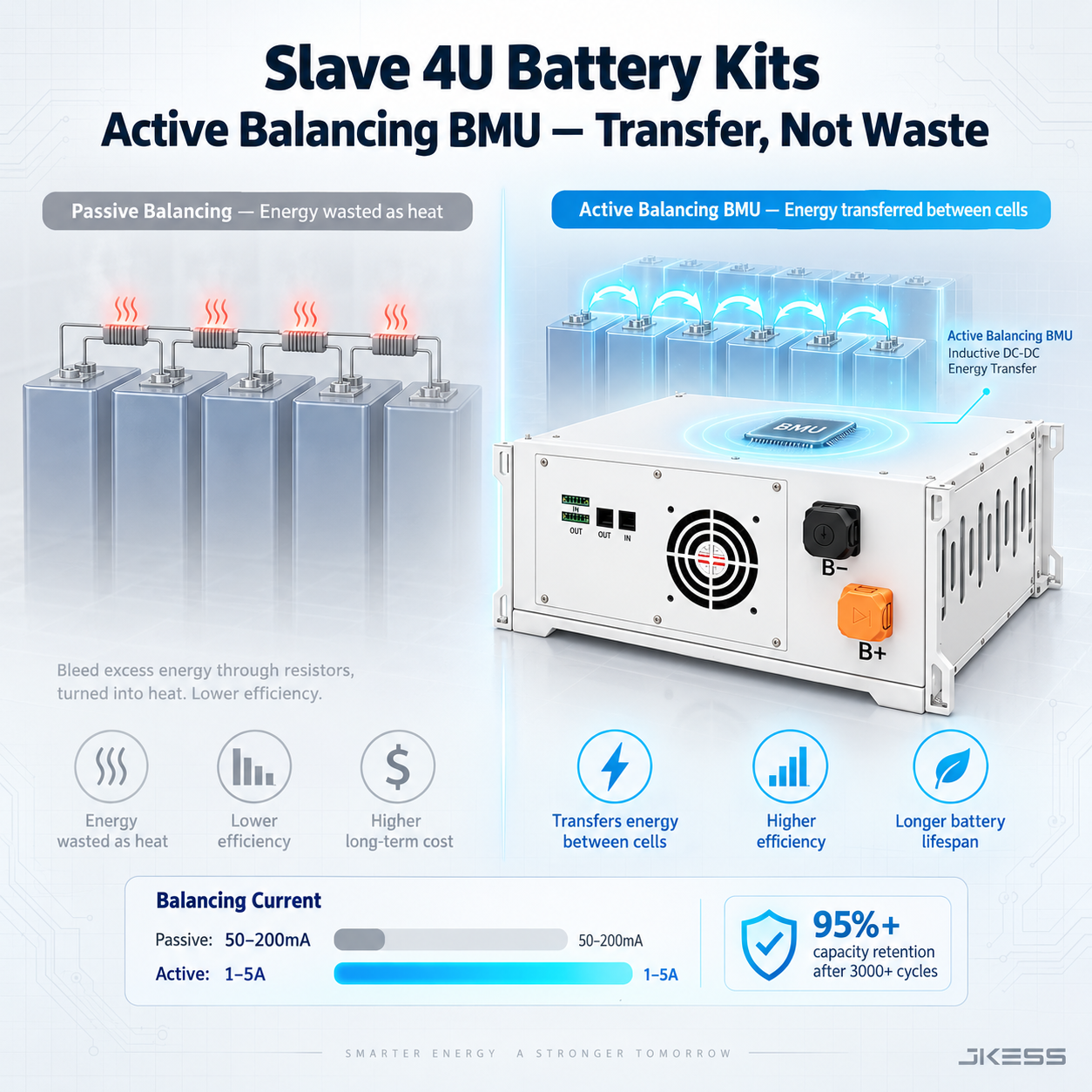
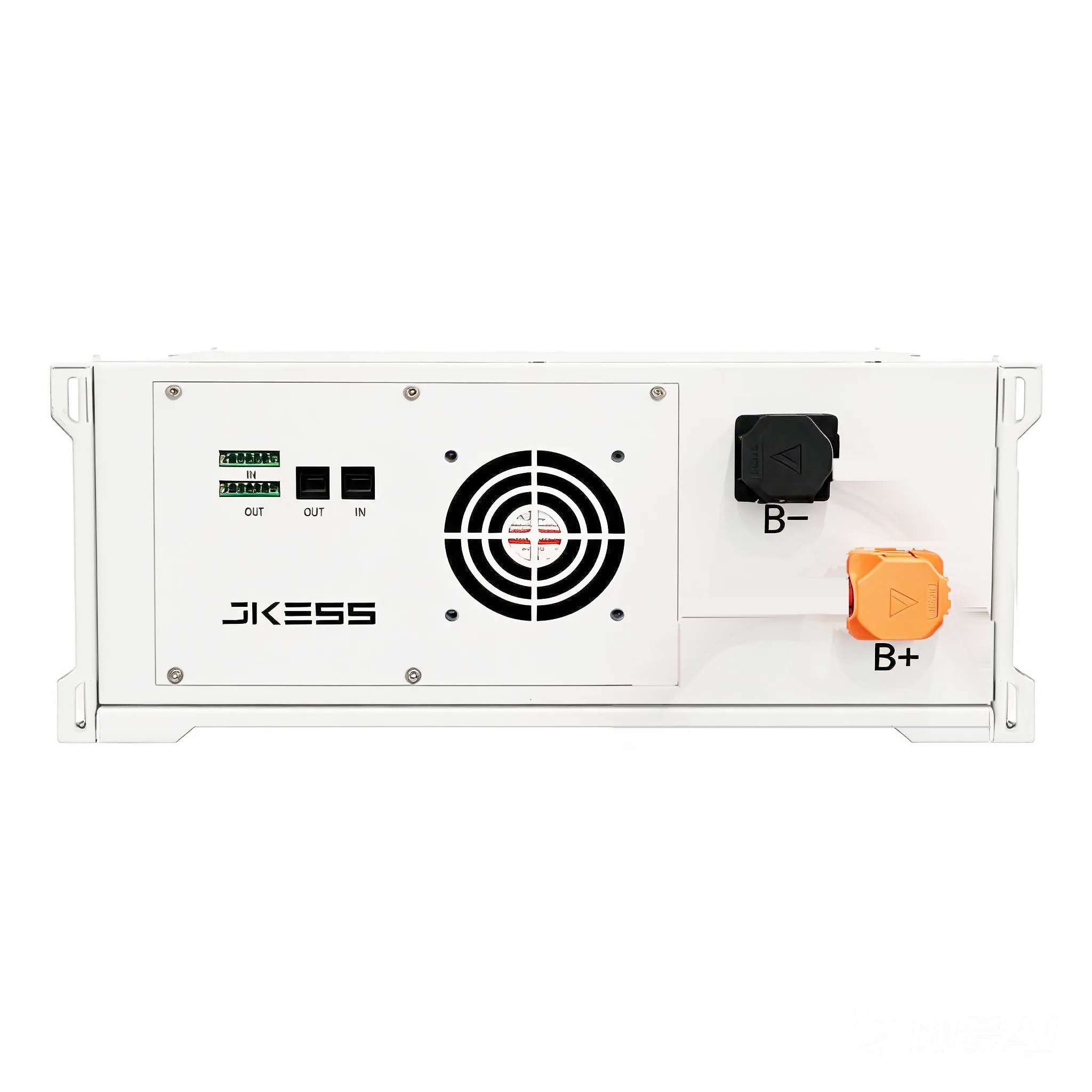
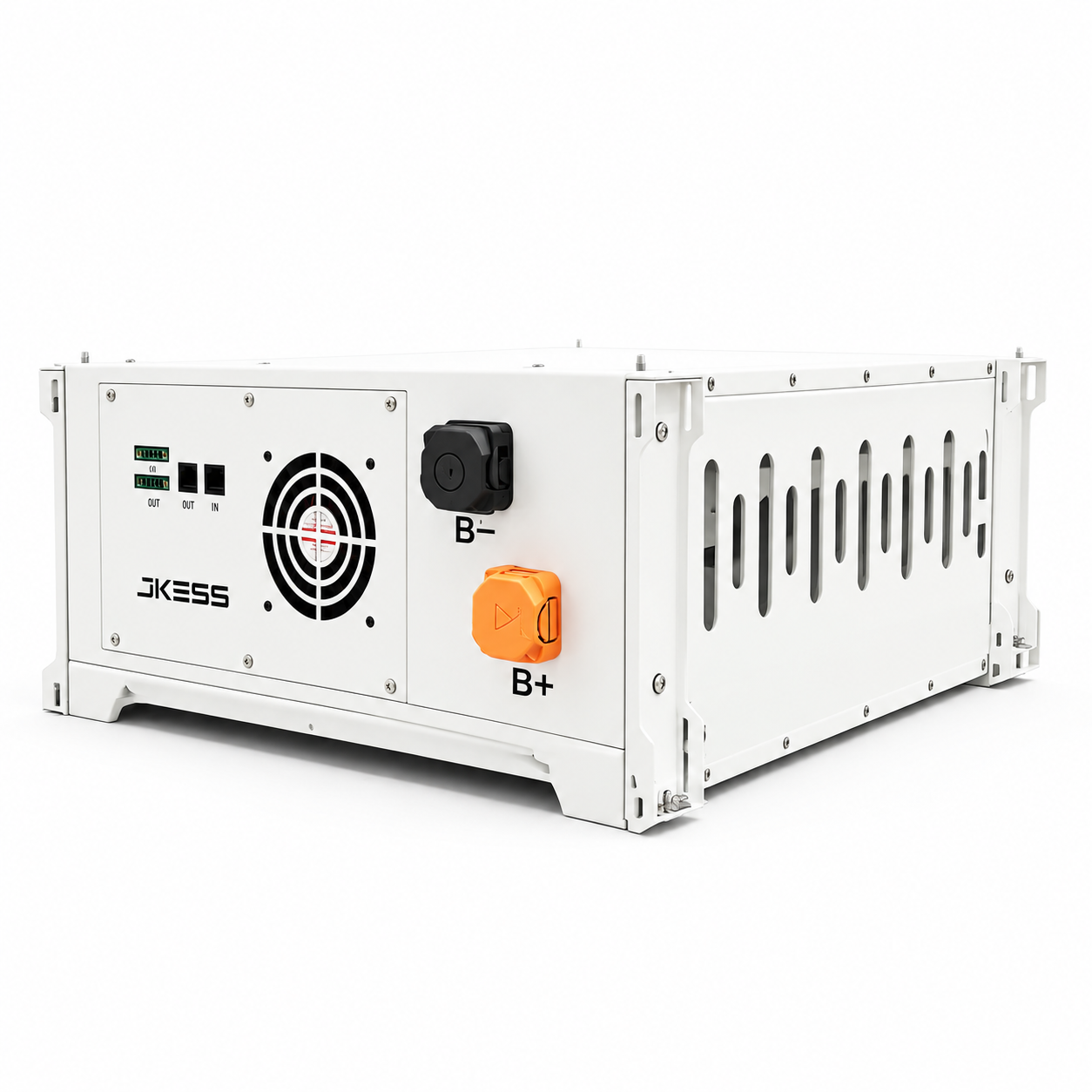
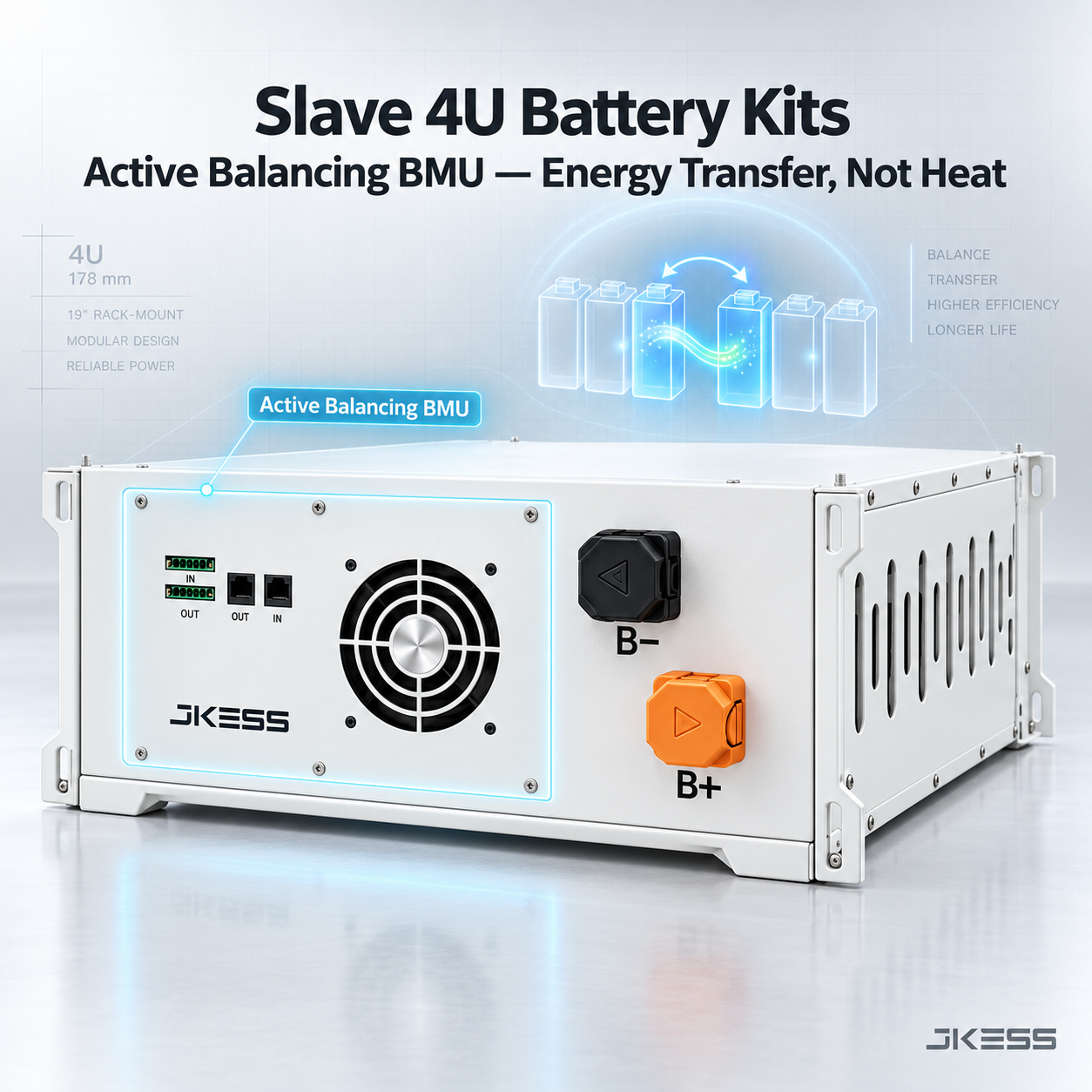
Pre-installed BMU-H5-16 slave BMU with 2A active balancing current. Transfers energy between cells rather than burning it off as heat — maintains 95%+ capacity over 3000+ cycles.

JKESS · High-Voltage Storage
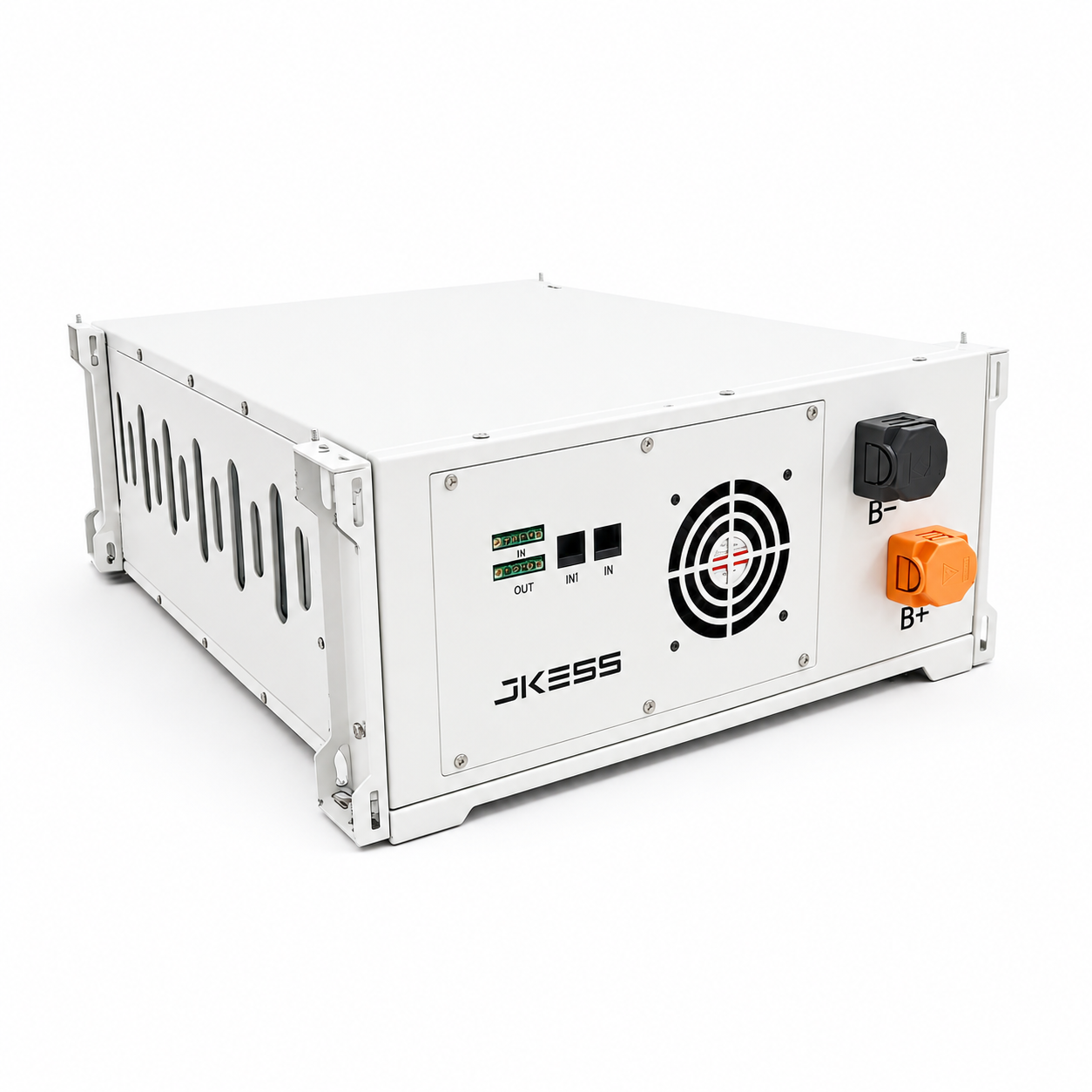
Get a Quote →A sheet-metal enclosure kit pre-installed with a 2A active balancing slave BMU — engineered for system integrators building scalable high-voltage LiFePO4 racks from 100V to 800V DC. Battery cells are NOT included.
Pre-installed BMU-H5-16 slave BMU with 2A active balancing current. Transfers energy between cells rather than burning it off as heat — maintains 95%+ capacity over 3000+ cycles.
178mm enclosure height. Standard 19“ rack-mount for space-constrained installations where external CCS is used. Ideal for residential HV ESS and telecom backup racks.
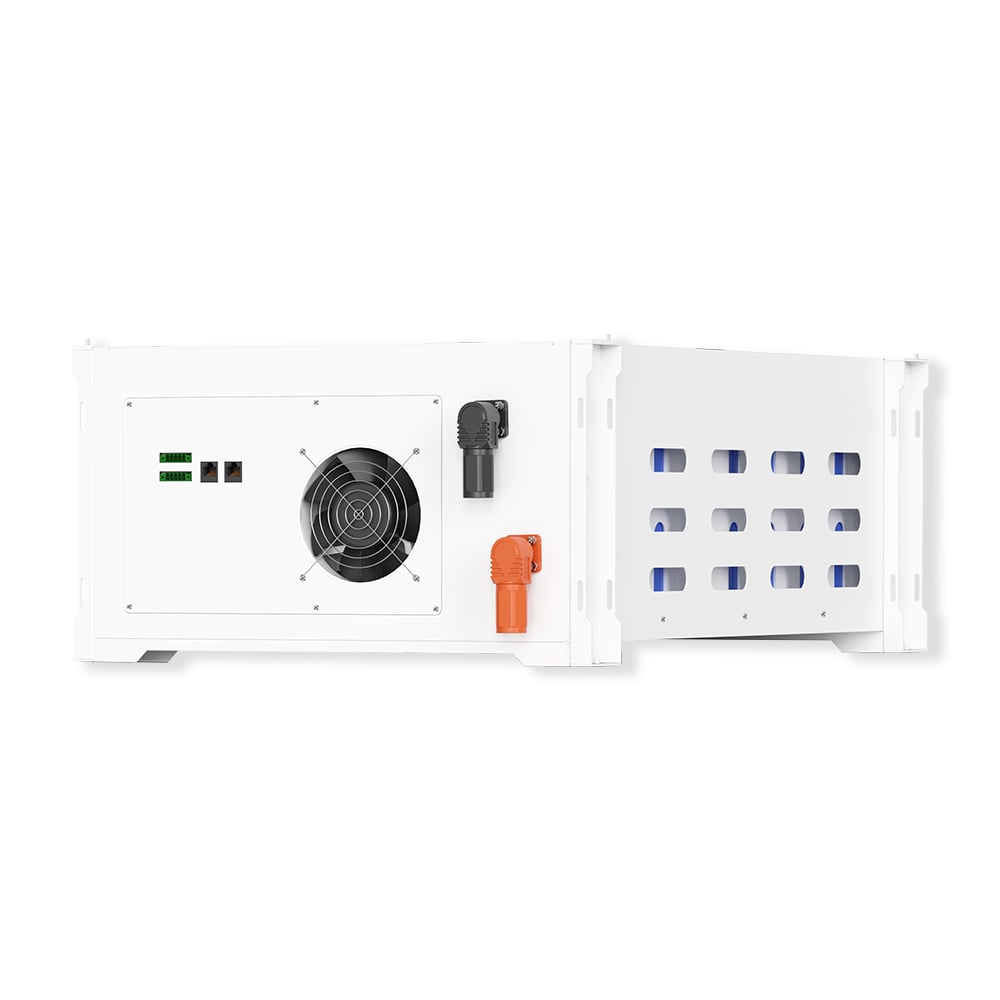
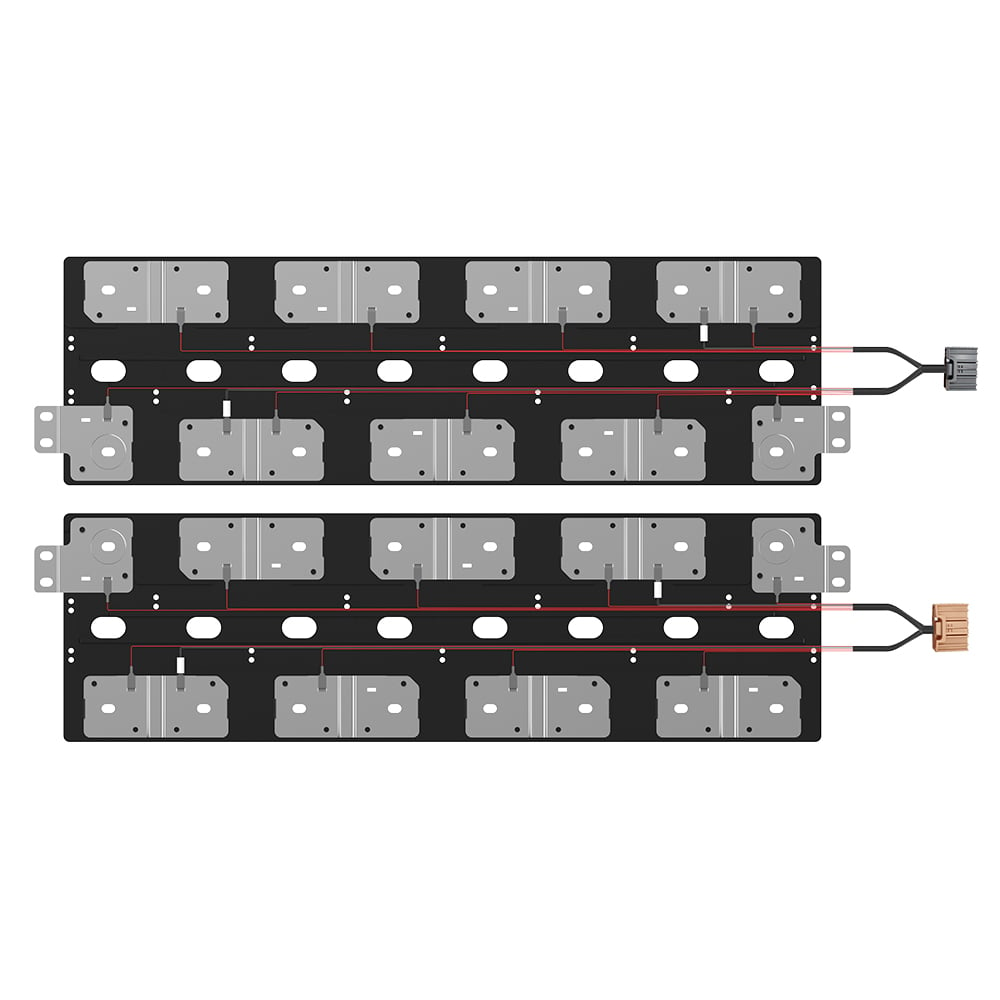
Cell sensing wiring harness and thermal (temperature) wiring harness pre-included. High-voltage B+/B- terminals with safety interlock design. Cooling fan with optimized airflow ventilation.
In stock in Poland (EU) and United States. 3–7 business days delivery. No customs delays, no import duty complications.
Battery cells are NOT included. Enclosure and BMS hardware kit only; customers supply their own LiFePO4 cells.
In high-voltage, series-connected battery packs, the choice of balancing method directly determines capacity retention and long-term reliability. The following comparison is based on JKESS engineering laboratory data and published research.
| Passive BalancingTraditional | Active BalancingJKESS Standard |
|---|---|
| Excess charge is dissipated as heat, wasting energy. | Energy is transferred between cells without waste. |
| Balancing current is typically only 50–200mA — very slow. | Balancing current can reach 1–5A — fast and effective. |
| Ineffective on the flat LiFePO4 voltage curve. | Effective across the full LiFePO4 SOC range. |
| Causes localized temperature increases. | Generates very little heat. |
| 10%–20% capacity loss in the first year. | Maintains 95%+ capacity after 3000+ cycles. |
| Does almost no balancing in the middle SOC range. | Works continuously throughout charging and discharging. |
| The weakest cell determines the usable capacity of the pack. | After balancing, usable capacity is determined by the average cell level. |
Why is 2A balancing current necessary for 300Ah-class cells?
For a 314Ah LiFePO4 cell, a 0.5% capacity difference corresponds to approximately 1.57Ah of charge to be balanced. At a 2A balancing current, one balancing compensation takes approximately 47 minutes. With 200mA passive balancing, the same amount requires approximately 7.85 hours — and passive balancing only operates near the end of charging, so the actual elapsed time is longer.
Capacity difference: 314Ah × 0.5% = 1.57AhAt 2A: 1.57Ah ÷ 2A = 0.785h ≈ 47 minutesAt 200mA: 1.57Ah ÷ 0.2A = 7.85 hoursSource: JKESS Engineering Laboratory, based on testing of a 16S LiFePO4 configuration.
JKESS HV Slave Battery Boxes are available in two rack-height configurations. Both share the same active balancing BMS platform; the differences are CCS integration and the intended application architecture.
| Configuration | 4U Kit — This Product | 6U Kit |
|---|---|---|
| Rack height | 178 mm (4U) | 267 mm (6U) |
| CCS (Charge Control Switch) | Not included | Included |
| Active Balancing Slave BMU | BMU-H5-16 included | BMU-H5-16 included |
| Cell Sensing Wiring Harness | Included | Included |
| Thermal Wiring Harness | Included | Included |
| High-Voltage B+/B- Terminals | Included, with safety interlock design | Included, with safety interlock design |
| Cooling Fan | Included | Included |
| Battery Cells | Not included — customer supplied | Not included — customer supplied |
| Best-fit architecture | Compact rack systems using external CCS | Systems requiring integrated HV switching and protection |
| Typical applications | Residential HV ESS, telecom backup, and space-constrained commercial and industrial (C&I) racks | C&I systems requiring built-in HV disconnection, and solar-plus-storage systems |
Why choose 4U? When your system architecture already includes external CCS, such as CCS integrated into the master control box, the 4U kit provides the same active balancing capability and complete wiring harnesses in a more compact 178mm enclosure. More units fit within a standard 19-inch rack, making 4U a practical choice for projects with strict rack-space constraints.
| Parameter | Value | Notes |
|---|---|---|
| Balancing method | Active balancing — inductive DC-DC conversion | Energy is transferred between cells rather than dissipated as heat. |
| Maximum balancing current | 2 A | Per channel |
| Maximum cell sampling count | 16 | 16S LiFePO4 |
| Cell voltage sampling range / accuracy | 1–4.5V / ±0.005V | 5mV accuracy |
| Temperature sampling channels | 8 NTC channels | — |
| Temperature sampling range / accuracy | −30 to 105°C / ±2°C | — |
| High-side channels / continuous current / maximum output | 2 / 1A / 3A @ 300ms | — |
| Cooling method | Intelligent air cooling / controllable fan cooling | Integrated into the front panel |
| Communication interfaces | CAN / RS485 / Daisy Chain | To the HV master control box |
| Cell chemistry | LiFePO4 | Supports 280Ah–314Ah prismatic cells |
| Battery box voltage range | 100V–800V DC | Depends on the series cell count; expanded through multiple boxes connected in series. |
Specification source: JKESS HV Slave Battery Box product page and brochure sheet.
The challenge: High-voltage packs connect dozens of cells in series, so the weakest cell limits the usable capacity of the entire pack. Passive balancing fails on the flat LiFePO4 voltage curve, with 10%–20% capacity loss within 12 months.
The JKESS solution: The BMU-H5-16 provides 2A active balancing continuously across the full SOC range to maintain cell consistency.
The challenge: Poorly ventilated enclosures create hotspots, accelerate cell degradation, and increase thermal runaway risk. Low-cost metal boxes may lack sufficient insulation distances and safety interlocks.
The JKESS solution: Precisely engineered ventilation slots, an integrated cooling fan, high-voltage insulated terminals, and a safety interlock circuit address these integration challenges.
The challenge: Battery hardware ordered from Asia typically takes 4–8 weeks to ship, with complex customs procedures delaying project schedules.
The JKESS solution: In-stock inventory in the EU warehouse in Poland and the US warehouse enables delivery in 3–7 business days, eliminating customs delays and import duty complications.
The challenge: Mixing enclosures, BMS boards, and wiring harnesses from different suppliers creates integration challenges, protocol mismatches, and unstable system performance.
The JKESS solution: The pre-installed BMU-H5-16, complete cell sensing and temperature sensor wiring harnesses, and standard CAN/RS485 communication protocols provide an out-of-the-box integration solution.
The challenge: Pre-assembled battery packs lock projects into fixed capacities; expansion can mean replacing an entire unit instead of adding modules.
The JKESS solution: The modular 19-inch rack design scales from 5 kWh to 1 MWh+ using a master-slave CAN bus architecture. Additional capacity is added by adding another battery box.
| Component | Quantity | Notes |
|---|---|---|
| Sheet-metal front panel, including communication board and fan | ×1 | Integrated communication board and cooling fan |
| Sheet-metal rear panel | ×1 | — |
| Sheet-metal top cover | ×1 | — |
| Sheet-metal bottom plate | ×1 | — |
| Sheet-metal side panels | ×2 | — |
| Support frames: 4 side frames + 2 bottom frames | ×6 | — |
| Active Balance Slave Control Unit (BMU-H5-16) | ×1 | Core component: 16S active balancing slave BMS |
| Positive and negative power connectors | Orange ×1 + Black ×1 | — |
| 8S battery module end plates | Orange ×2 + Black ×2 | — |
| 8S battery module side plates | ×4 | — |
| Copper busbar connector caps | Orange ×2 + Black ×2 | — |
| M6-195 long screws | ×4 | — |
| Inter-box communication cable | ×1 | — |
| 24V power and fan communication cable | ×1 | — |
| PACK power cable | ×1 | — |
| CCS harness-integrated copper busbar | ×1 | — |
| 8S module side epoxy boards | ×4 | — |
| 8S module bottom epoxy boards | ×2 | — |
| PET insulation sheets, black | ×4 | — |
| Cell epoxy boards | ×14 | — |
| Positive copper busbar, orange | ×1 | — |
| Negative copper busbar, black | ×1 | — |
| Battery connection copper busbar | ×1 | — |
Pair with high-voltage hybrid inverters operating at 200V–500V for whole-home backup, solar self-consumption, and time-of-use energy arbitrage. Stack multiple boxes to build 10–40 kWh systems.
Build 100 kWh–1 MWh+ rack-based systems for demand charge management, peak shaving, load shifting, and uninterrupted power supply.
Integrate with solar arrays and high-voltage PCS to store surplus solar generation. High-voltage architectures reduce conversion losses by 3%–5% compared with low-voltage alternatives.
Deploy in remote locations, island communities, and off-grid facilities to provide reliable high-voltage battery storage.
Provide reliable backup power for 5G base stations, data centers, and telecommunications infrastructure. High-voltage design enables thinner cables, less heat, and higher efficiency.
Support fast-charging stations with energy buffering and peak shaving. High-voltage battery racks directly match DC fast-charging bus voltages to minimize conversion stages.
No. The JKESS HV slave battery kit is a sheet-metal enclosure and BMS hardware kit, and LiFePO4 battery cells are NOT included. Customers source their own cells to complete the battery pack. This kit-based approach gives you the flexibility to choose cell suppliers, capacities, and grades that best fit your project requirements and budget.
The 6U HV slave battery kit includes a CCS (Charge Control Switch) for integrated high-voltage switching and protection. The 4U HV slave kit does not include CCS but comes pre-equipped with cell sensing wiring harnesses and thermal management wiring. Both models include the active balancing slave BMU (BMU-H5-16), high-voltage terminals, cooling fan, and premium sheet-metal enclosure.
Yes. Every JKESS HV slave battery kit includes a slave BMU with active cell balancing capability. Active balancing transfers energy between cells using inductive DC-DC conversion rather than dissipating it as heat. The BMU-H5-16 delivers up to 2A balancing current with ±0.005V cell sampling accuracy and 8 NTC temperature sensors.
The JKESS HV slave battery boxes are designed for high-voltage energy storage systems typically operating in the 100V–800V DC range, depending on the number of cells configured in series. Multiple slave boxes can be connected in series to achieve higher system voltages.
Yes. The rack-mount 4U form factor (178mm height) is designed for standard 19-inch server racks. Multiple slave boxes can be stacked vertically in a rack and connected in series to build higher-voltage, higher-capacity battery systems. Each slave box communicates with the HV master control box via the integrated CAN/RS485 communication bus.
Orders shipped from our EU warehouse (Poland) typically arrive within 3–7 business days to most European countries. Orders from our US warehouse typically arrive within 3–5 business days to continental US addresses. Local warehouse shipping eliminates customs delays, import duties complications, and reduces international transit time from 4–8 weeks to just a few days.
The JKESS slave BMU supports standard BMS communication protocols including CAN (Controller Area Network) and RS485. It communicates with the JKESS HV master control box, which in turn can interface with compatible inverters, PCS, and energy management systems. The master-slave architecture allows multiple slave boxes to be monitored and controlled by a single master unit.
JKESS products comply with international export standards. The sheet-metal enclosure is designed with proper ventilation, high-voltage insulation, safety interlocks, and appropriate creepage/clearance distances to meet global energy storage safety standards including IEC 62619 and UL 1973. For specific certification needs, please contact our team.
The enclosure is physically compatible with various BMS configurations, but the kit is optimized and pre-wired for JKESS slave BMU units. Using third-party BMS may require custom wiring modifications and may not fit the pre-designed mounting points. We strongly recommend using the included JKESS slave BMU for optimal active balancing functionality and seamless master-slave communication.
Sample orders are available for individual kits — no minimum order quantity for standard products. For bulk and project orders, please contact us for volume pricing and lead times. We offer comprehensive OEM and ODM services including custom enclosure dimensions, private branding/labeling, bespoke wiring configurations, and custom BMS firmware.
Contact our B2B sales team for pricing, technical specifications, volume discounts, and OEM/ODM customization. We respond within 24 hours.
Request a Custom Quote →